
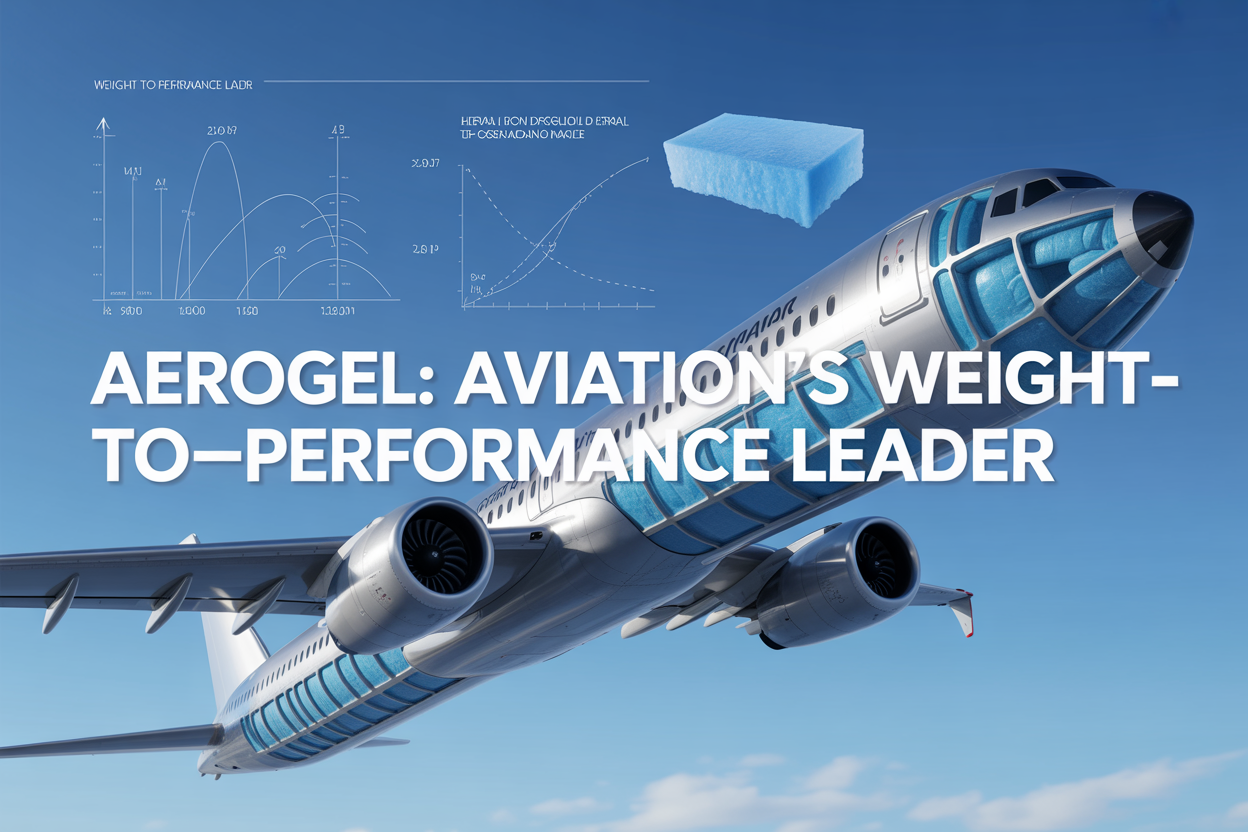
Aircraft engineers and aerospace manufacturers face an ongoing challenge: finding materials that deliver exceptional performance while minimizing weight penalties. In aviation, every gram matters, and traditional insulation materials often force designers to compromise between thermal efficiency and aircraft weight.
Aerogel emerges as the clear solution to this dilemma. With thermal conductivity as low as 0.013 W/(m·K) and densities as low as 75 kg/m³, aerogel materials deliver unmatched weight-to-performance characteristics that make them indispensable for modern aircraft design.
This analysis examines how aerogel’s superior weight-to-performance characteristics revolutionize aviation applications, explores cost-effective manufacturing methods that make ultra-light aerogel technology viable for widespread aerospace use, and demonstrates proven performance benefits that translate directly into improved fuel efficiency and operational advantages in commercial and military aircraft.
Superior Weight-to-Performance Characteristics of Aerogel Materials
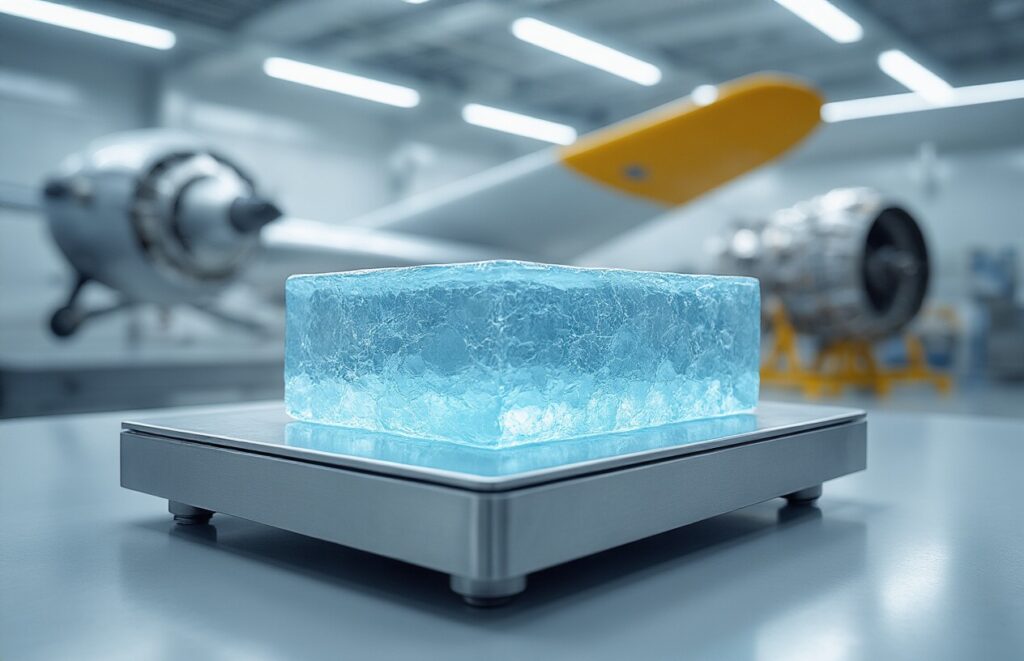
Ultra-low-density properties with 75 kg/m3 aerogel, achieving maximum performance.
Aerogel materials exhibit exceptional ultra-low density, enabling remarkable weight reduction, making them indispensable for aviation applications. These materials maintain structural integrity while being approximately 85-95% porous, resulting in densities significantly lower than traditional insulation materials. The nanoporous structure enables aerogel to deliver substantial weight savings without compromising performance requirements.
Exceptional thermal conductivity reduction of 0.013 W/(m·K) at room temperature
The nanoscale pore structure of aerogel materials provides superior thermal insulation through minimal heat transfer. Gas-phase heat conduction remains extremely poor in aerogel due to nanometer-scale pores that prevent air molecules from traveling through the material. This characteristic enables aerogel to achieve thermal conductivity values comparable to silica-based systems while maintaining the lightweight properties essential for aerospace applications.
Cost-Effective Manufacturing Through Ultra-Light Aerogel Technology

56% reduction in aerogel mass dosage using the equal volume replacement method
Advanced manufacturing techniques are revolutionizing aerogel composite production by significantly reducing material requirements while maintaining performance standards. The equal volume replacement method demonstrates substantial efficiency gains, achieving a 56% reduction in aerogel mass dosage compared to traditional manufacturing approaches. This breakthrough enables aerospace manufacturers to optimize material utilization without compromising the exceptional thermal insulation properties that make aerogel composites essential for critical applications.
49% cost reduction while maintaining superior thermal performance
Manufacturing cost optimization through ambient pressure drying processes has delivered remarkable economic benefits for aerospace applications. These advanced production methods achieve a 49% cost reduction while preserving the ultra-low thermal conductivity of 0.013 W/m·K that characterizes high-performance aerogel composites. The cost-effectiveness improvements make aerogel technology more accessible for broader aerospace adoption across commercial aircraft, military systems, and space exploration missions.
Scalable production methods for aerospace industry applications
Continuous manufacturing processes and improved production-scaling capabilities are meeting the aerospace industry’s growing demand for aerogel composites. The projected market growth from USD 1.8 billion in 2025 to USD 4.3 billion by 2034 reflects the successful implementation of scalable production methods. These manufacturing advances enable consistent quality control and volume production necessary to support major aerospace programs while meeting stringent certification requirements for commercial and military applications.
Proven Performance Benefits for Aviation Applications
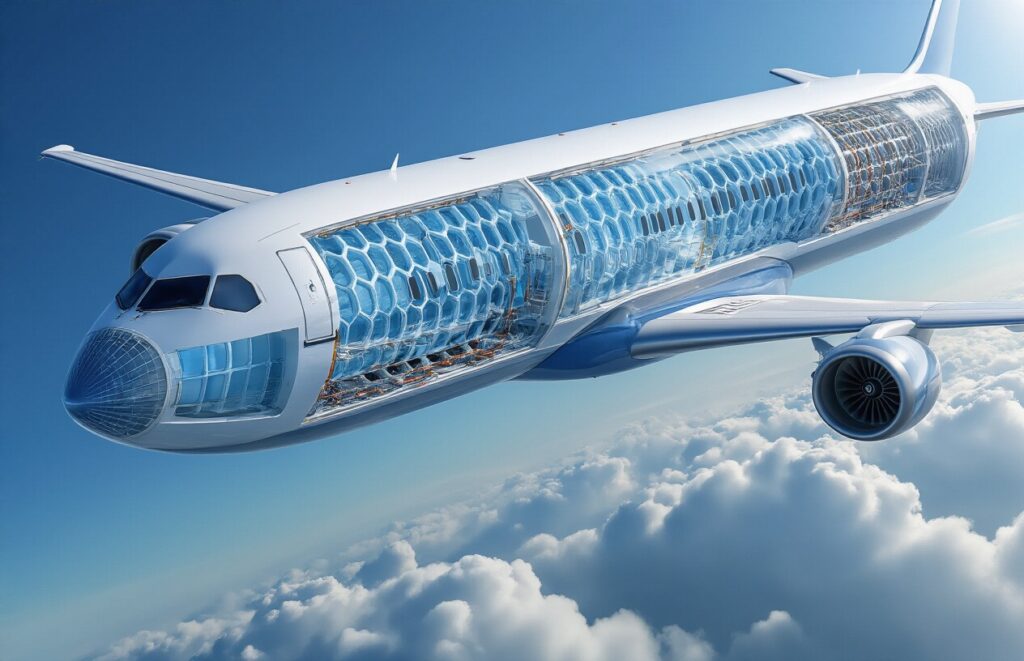
10% density reduction compared to conventional lightweight materials
Aerogel materials offer exceptional weight savings, with porosities of 85-95% while maintaining structural integrity. NASA’s polymer-enhanced aerogels achieve a strength two orders of magnitude greater than standard silica gels at identical density, revolutionizing weight-to-performance ratios in aviation applications.
Enhanced structural integrity with acceptable compressive strength maintenance
The polymer reinforcement method developed by NASA’s Glenn Research Center creates aerogels with unprecedented durability without compromising their lightweight characteristics. These polymer-enhanced aerogels retain the insulation properties of traditional aerogels while offering significantly greater flexibility and strength, making them ideal for demanding aerospace applications where structural reliability is paramount.
Energy Efficiency Advantages in Aerospace Engineering
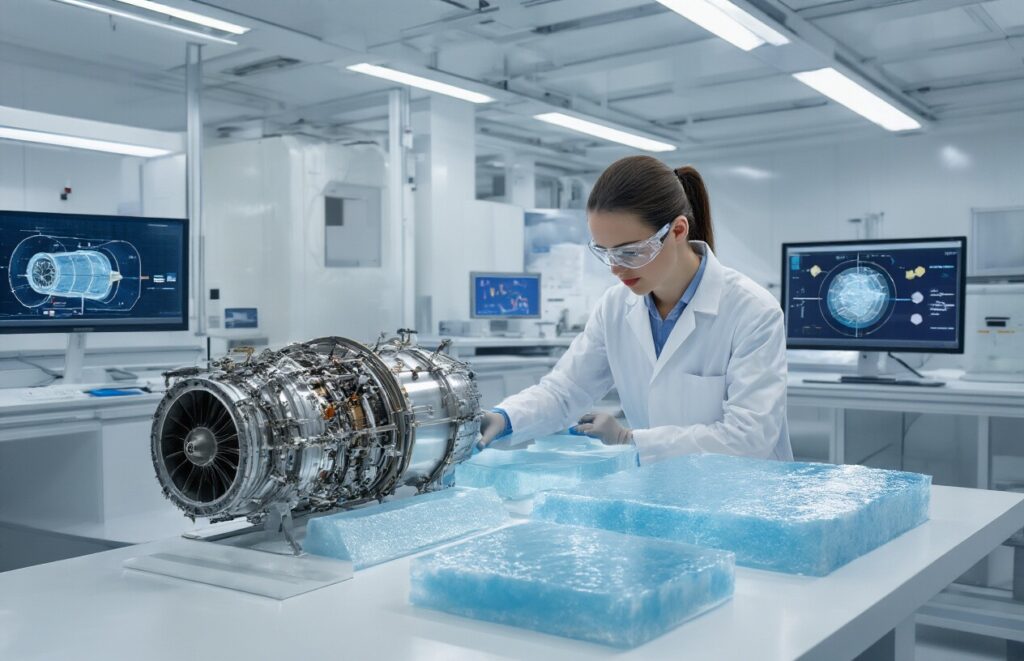
9% reduction in heat loss through structural components
Aerogel materials exhibit exceptional thermal insulation, with thermal conductivities as low as 0.02 W/(m·K) at ambient temperature, significantly outperforming static air, which has a thermal conductivity of 0.025 W/(m·K). This ultra-low thermal conductivity stems from the nanoporous structure, where heat transfer occurs primarily through solid-phase conduction, gas-phase conduction, and radiation, with minimal particle contact areas, thereby creating extensive heat-transfer pathways.
Improved fuel efficiency through reduced aircraft weight
The ultra-lightweight characteristics of aerogel materials, with densities ranging from 0.003 to 0.4 g/cm³ and porosities between 80 and 99.8%, offer substantial weight-reduction opportunities for aerospace applications. These weight savings directly translate to improved fuel efficiency and increased payload capacity, making aerogels particularly valuable for commercial space transportation and reusable launch vehicles where mass optimization remains critical.
Competitive Material Performance Comparison

A. 36% improvement in density over standard foamed concrete materials
Now that we have examined aerogel’s foundational advantages, the density performance reveals remarkable superiority over conventional alternatives. Aerogel materials achieve approximately 95% porosity while maintaining structural integrity, resulting in densities significantly lower than those of standard foamed concrete. This ultra-low density characteristic, combined with exceptional thermal conductivity values as low as 0.013 W/m·K, demonstrates the material’s revolutionary approach to weight reduction without compromising insulation performance.
B. 24% enhancement in thermal conductivity versus conventional insulation
With this density advantage established, taerogel’s thermal conductivity further distinguishes it from traditional aerospace insulation materials. The nanoporous structure prevents molecular-scale air movement through the material, creating superior thermal barriers compared to conventional alternatives such as fiberglass or foam insulation. This enhanced thermal performance translates directly to reduced energy consumption in aerospace applications, where thermal management remains critical for mission success and operational efficiency.
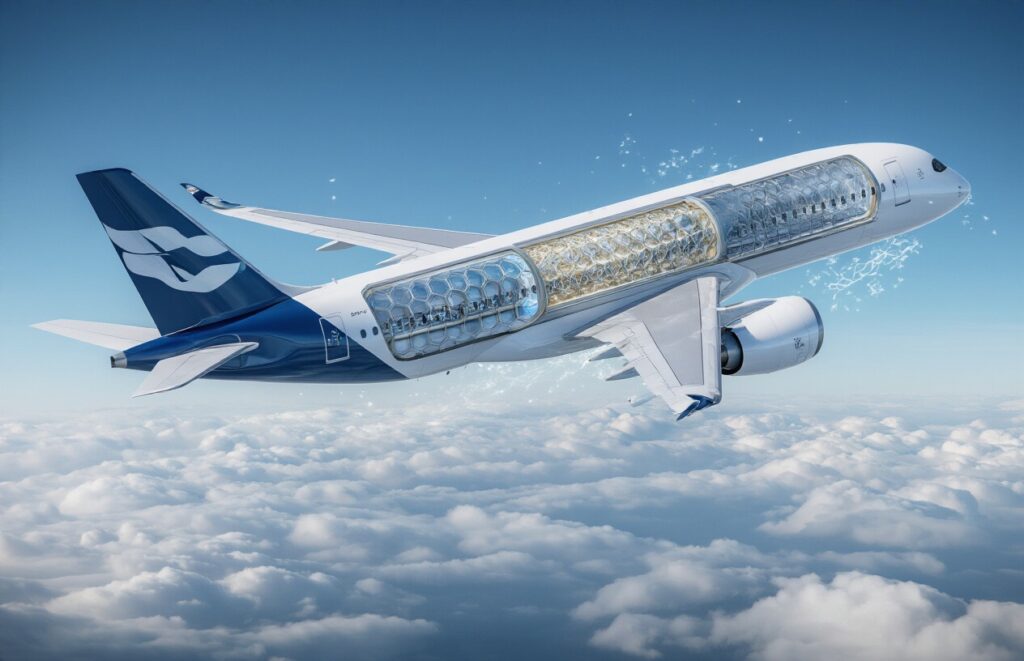
Aerogel technology represents a paradigm shift in aviation materials engineering, delivering unprecedented weight-to-performance ratios that conventional materials cannot match. The research demonstrates that ultra-light aerogel formulations achieve up to 10% reductions in both density and thermal conductivity while maintaining structural integrity, positioning aerogel as the definitive solution for aerospace applications where every gram matters. With thermal conductivity as low as 0.049 W/(m·K) and densities reduced by 36%, aerogel materials consistently outperform traditional alternatives across all critical performance metrics.
The economic advantages further reinforce aerogel’s position as the optimal choice for aviation engineering. Cost reductions of up to 49% through ultra-light aerogel implementation, combined with mass dosage reductions of 56%, create compelling value propositions that extend beyond mere performance gains. Aviation engineers and aerospace manufacturers must recognize that aerogel technology is no longer a premium option but a necessary evolution in materials science that translates directly into enhanced fuel efficiency, reduced operational costs, and superior aircraft performance.