
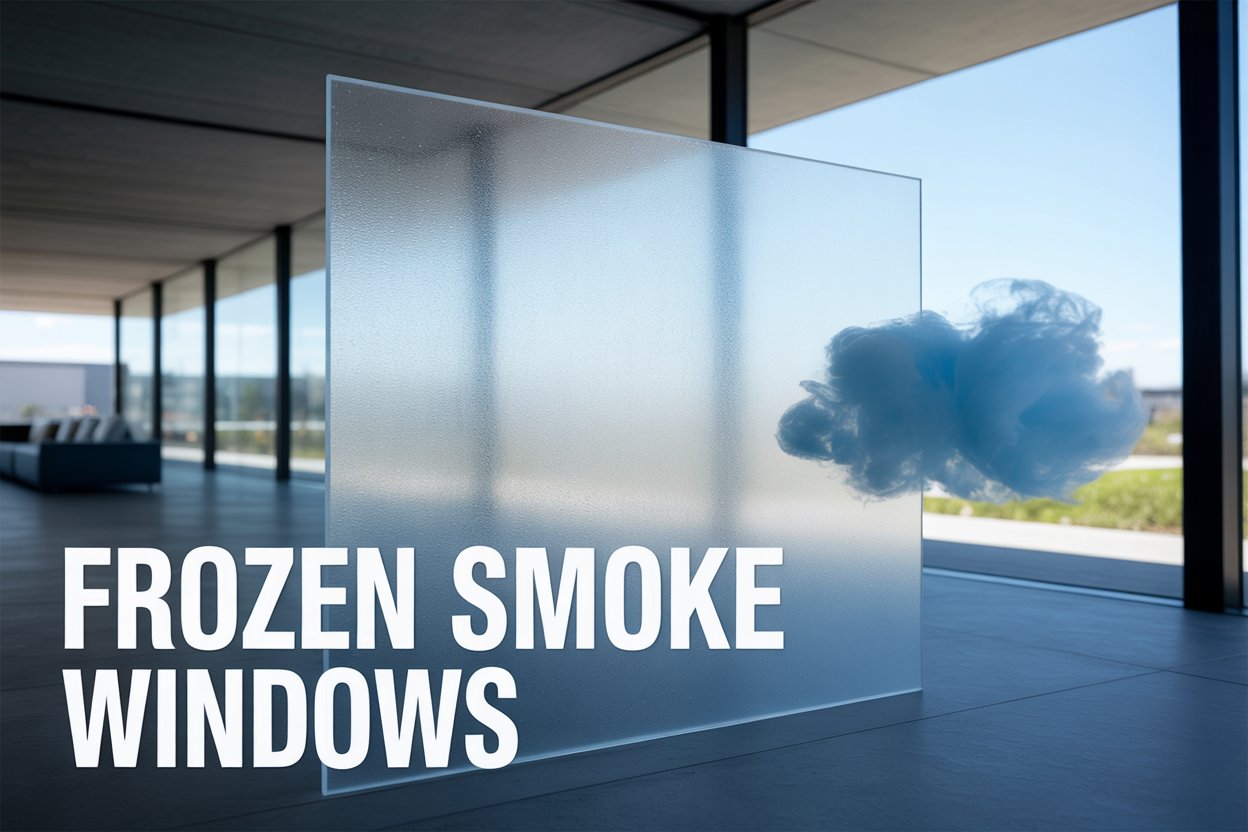
Transparent Aerogels: Could Your Future Windows Be Made of “Frozen Smoke”?
If you’ve ever touched a window on a cold morning and felt that instant chill, you already know the problem. Glass lets in light, but it also lets out heat — and that’s a trade-off buildings have accepted for centuries. Transparent aerogel windows could change that.
This one’s for homeowners, architects, sustainability enthusiasts, and anyone curious about where building materials are headed next.
We’ll break down what aerogel actually is and why scientists nicknamed it “frozen smoke,” look at how transparent aerogel windows work and what’s been slowing them down, and then get into the real-world breakthroughs making this material cheaper and easier to scale — because companies like DashamLabs are already proving aerogel insulation doesn’t have to stay niche or out of reach.
By the end, you’ll have a clear picture of whether aerogel windows are still a lab experiment or something you might actually see in buildings soon.
What Is Aerogel and Why Is It Called “Frozen Smoke”

The Science Behind Aerogel’s Unique Structure
Aerogel is a synthetic, ultra-porous material created by replacing the liquid component of a gel with gas through a process called supercritical drying. This technique preserves the gel’s intricate solid nanoscale network while eliminating liquid-induced shrinkage, resulting in a structure that is up to 99.8% air. The remaining solid framework consists of tiny silica nanoparticles interconnected like a three-dimensional spider web, giving aerogel its hauntingly translucent, cloud-like appearance — which is precisely why scientists and enthusiasts alike call it “frozen smoke.”
Key Physical Properties That Make It Stand Out
Aerogel’s composition grants it remarkable physical properties that few materials can rival. Its exceptionally low density makes it nearly weightless, while its tortuous nanoporous structure severely limits heat conduction and convection. With this in mind, next, we’ll see how silica aerogel specifically amplifies these advantages for window applications.
Why Silica Aerogel Is the Most Promising Variant
Among all aerogel types, silica aerogel stands out due to its optical transparency, thermal resistance, and relative chemical stability. These qualities make it uniquely suited for glazing applications where both light transmission and insulation performance are critical priorities.
How Transparent Aerogels Could Revolutionize Window Technology

Superior Insulation Performance Compared to Traditional Glass
Transparent aerogels offer thermal performance far beyond that of conventional double- or triple-pane glass. Their nanoporous structure traps air at a microscopic level, dramatically reducing conductive and convective heat transfer. This makes them exceptionally effective insulators while maintaining structural transparency — a combination that traditional glazing systems have never achieved.
Light Transmission Without Sacrificing Energy Efficiency
With this in mind, aerogel windows present a compelling balance: allowing natural daylight to penetrate interior spaces while minimizing thermal bridging. Unlike standard glass, which readily transfers heat, transparent aerogel panels maintain optical clarity without compromising their insulating properties, making them ideal candidates for energy-conscious architectural design.
Potential to Slash Heat Loss in Buildings
Previously, high-performance insulation meant opaque walls. Aerogel changes that equation entirely. Buildings lose significant energy through windows — often the weakest thermal point in any envelope. Transparent aerogel glazing could dramatically reduce this heat loss, lowering heating and cooling demands and positioning windows as active contributors to a building’s overall energy efficiency rather than liabilities.
The Challenges Holding Aerogel Windows Back

High Production Costs and Manufacturing Complexity
High-performance insulation, including aerogel, has historically been inaccessible due to prohibitively high costs, excessive bulk for practical use, or simply difficulty deploying at scale. The intricate manufacturing processes required to produce transparent aerogel panels drive costs far beyond those of standard glazing solutions, making widespread residential or commercial adoption economically unviable in most markets today.
Fragility and Scalability Limitations
With this in mind, fragility significantly compounds the cost problem. Aerogel’s delicate silica structure, while thermally exceptional, makes large-format panels vulnerable to cracking during handling, installation, and everyday structural stress. Scaling production without sacrificing optical clarity or structural integrity remains a formidable engineering challenge that manufacturers have yet to fully resolve.
Barriers to Widespread Commercial Adoption
Previously, high-performance insulation solutions have consistently struggled to bridge the gap between laboratory promise and real-world deployment. Aerogel windows face that same barrier — being too expensive, too complex to install, and insufficiently robust for the demands of mainstream construction, which collectively stall their transition from niche innovation to standard building material.
Breakthroughs Making Aerogel More Accessible and Scalable
Process Innovations Driving Cost Efficiency
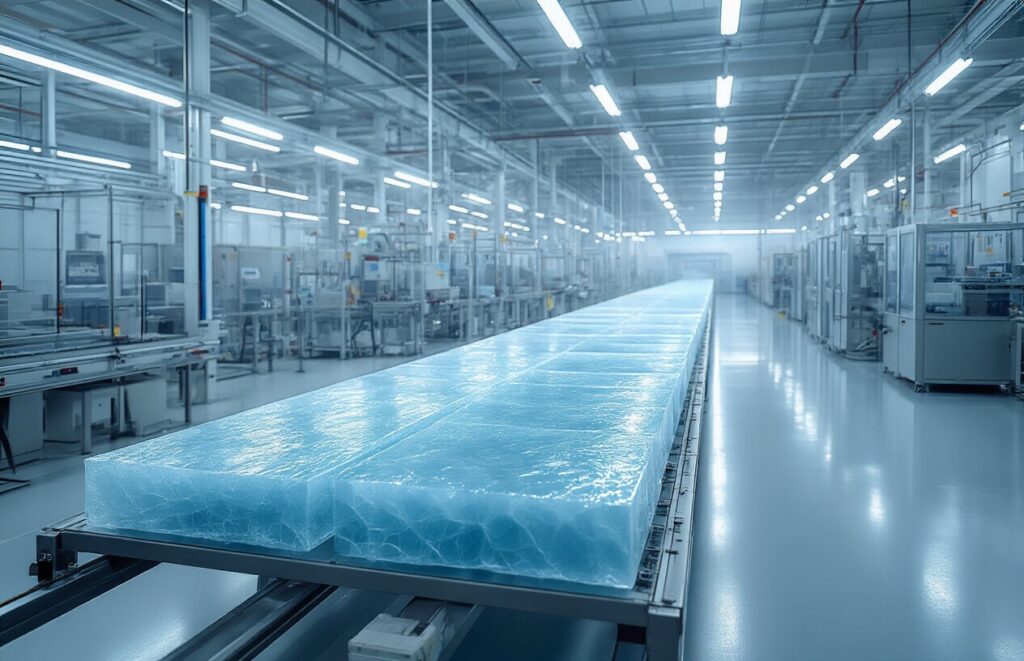
Previously, one of aerogel’s biggest barriers was its prohibitively expensive and slow production process. Companies like DashamLabs are directly tackling this through an Indian-patented breakthrough in materials science and manufacturing that enables continuous production at scale, fundamentally reshaping the cost equation and making aerogel insulation a commercially viable option rather than a luxury material.
Flexible Aerogel Sheet Formats for Easier Deployment
How Companies Like DashamLabs Are Changing the Game
With this in mind, DashamLabs is developing silica aerogel in flexible sheet formats, eliminating traditional deployment complexities across industries. Their core mission is to transform deep-science innovations into scalable, high-performance products — ultimately making aerogel insulation the natural, go-to choice for energy efficiency worldwide.
Industries Already Benefiting From High-Performance Aerogel Insulation

Oil and Gas and Industrial Process Systems
Aerogel insulation has found a strong foothold in the oil and gas sector, where extreme temperatures and demanding process systems require superior thermal performance. Its ultra-low thermal conductivity makes it ideal for insulating pipelines, equipment, and industrial facilities where energy efficiency and safety are critical priorities.
Cold Chain Logistics and Mobility Applications
With this in mind, cold chain logistics and mobility applications have equally embraced Aerogel’s capabilities. Maintaining precise temperature control during transport is essential, and aerogel’s lightweight yet high-performance insulation delivers exactly that. From refrigerated vehicles to temperature-sensitive cargo containers, aerogel helps preserve product integrity while reducing energy consumption across the supply chain.
Aerospace and Advanced Manufacturing
Previously, aerospace engineers struggled to find materials that balanced weight savings with thermal protection. Aerogel insulation addresses both challenges effectively, offering exceptional performance in environments where traditional insulating materials fall short. Its adoption in aerospace and advanced manufacturing reflects the material’s versatility and reliability under some of the most rigorous operational conditions imaginable.
The Environmental and Energy Impact of Aerogel Adoption

Reducing Industrial Heat Loss at Scale
Insulation remains one of the most powerful tools available for cutting industrial heat losses at scale. Aerogel adoption enables industries to dramatically slash energy waste across operations, reducing the volume of heat that escapes through walls, pipelines, and structural components. With this in mind, the cumulative impact across entire industrial sectors becomes substantial, translating raw material savings into measurable efficiency gains.
Contributing to Climate Change and Sustainability Goals
Previously, industries struggled to balance productivity with environmental responsibility. Aerogel directly addresses this challenge by contributing to climate change mitigation and broader sustainability goals. DashamLabs’ aerogel insulation is specifically engineered with a minimal environmental footprint, empowering industries to thrive sustainably without compromising performance. Now that we have covered its environmental credentials, it is clear why aerogel stands as one of the most powerful and forward-thinking insulation solutions available today.
What the Future Holds for Aerogel Windows and Smart Buildings

Timeline for Transparent Aerogel Windows Reaching the Market
Now that we have covered the breakthroughs accelerating aerogel’s scalability, the question becomes: when does this reach your home or office? Companies like DashamLabs are actively working to scale aerogel insulation for global deployment, positioning this technology closer to mainstream adoption than ever before. Their focus on solving pressing global challenges signals that market-ready solutions are not a distant dream but an emerging reality being built right now.
Global Innovation Hubs Driving Next-Generation Materials
With this in mind, it is worth noting that innovation is no longer confined to traditional Western research centers. DashamLabs is strategically building a portfolio designed to establish India as a global leader in advanced materials. By developing scalable, India-made aerogel insulation for worldwide markets, they represent a broader shift in where next-generation building materials are being pioneered, diversifying the global supply chain and accelerating competitive development.
Why Now Is the Right Time to Pay Attention to This Technology
Previously, aerogel remained a niche, high-cost curiosity. Today, organizations are deliberately scaling it to address urgent global challenges around energy efficiency and sustainability. The convergence of manufacturing ambition, strategic national positioning, and real-world applicability makes this the critical window to watch this technology evolve from laboratory marvel into everyday infrastructure.

Transparent aerogels represent one of the most exciting breakthroughs in materials science of our time. From their extraordinary insulating properties to their ghost-like, “frozen smoke” appearance, they have the potential to redefine how we think about windows, buildings, and energy efficiency. While challenges around cost and scalability have slowed mainstream adoption, recent manufacturing innovations are closing that gap fast — making high-performance aerogel insulation more accessible across industries ranging from oil and gas to cold chains and aerospace.
The road to aerogel windows lining every smart building may still be unfolding, but the direction is clear. Companies like DashamLabs are already proving that scalable, cost-efficient aerogel production is achievable — rooted in deep science and built for real-world impact. As the technology matures and adoption grows, aerogel stands to become one of the most powerful tools we have for cutting energy waste and building a more sustainable future. Whether you’re in construction, manufacturing, or simply curious about what tomorrow’s materials look like, aerogel is a space worth watching closely.