
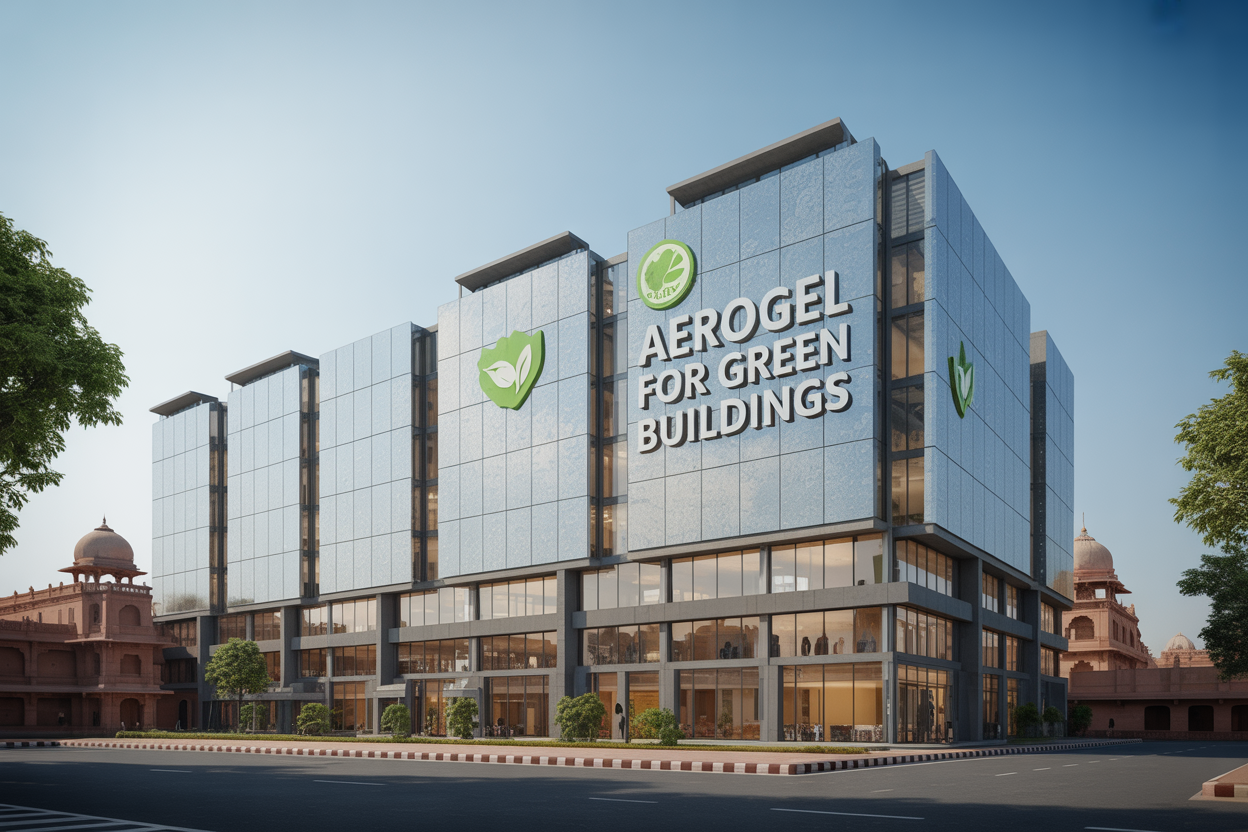
How Does Aerogel Help Buildings Get Green Certifications in India?
Green building certifications such as LEED, GRIHA, and IGBC are becoming essential in India’s construction sector as developers and property owners seek to meet sustainability goals and attract environmentally conscious tenants. Aerogel insulation is a game-changing material that directly meets these certification requirements through superior thermal performance and environmental benefits.
This guide is designed for architects, building developers, construction professionals, and facility managers in India working on sustainable projects who need to understand how advanced insulation materials can boost their green certification scores.
The discussion covers how aerogel’s exceptional energy efficiency drives environmental credits in major certification programs, the ways improved indoor air quality and thermal comfort contribute to occupant health standards, and how regulatory compliance with India’s energy codes strengthens overall green building credentials. Real examples from commercial building projects demonstrate aerogel’s proven track record in achieving certification success while delivering long-term asset value for sustainable construction investments.
Environmental Benefits Drive Green Certification Success

Superior Thermal Performance Reduces Energy Consumption by 40%
Aerogel insulation demonstrates exceptional thermal performance through its unique nano-porous silica structure, which effectively traps air within microscopic pores and significantly reduces heat transfer. This superior insulation capability enables buildings to achieve substantial reductions in heating and cooling energy consumption of up to 40%, directly contributing to lower greenhouse gas emissions and supporting compliance with international climate targets.
Nano-Porous Silica Structure Minimizes Carbon Footprint
The innovative nano-porous design of aerogel materials creates one of the most effective thermal barriers available, with thermal conductivity values among the lowest in the industry. Buildings incorporating aerogel insulation achieve measurable reductions in energy use and emissions, providing robust data for ESG performance reporting and helping organizations meet increasingly stringent energy-efficiency standards and building codes worldwide.
Durable Materials Reduce Waste and Replacement Frequency
Aerogel materials are engineered for exceptional durability and longevity, significantly reducing replacement frequency and waste generation compared to traditional insulation materials. This extended lifespan minimizes environmental impact throughout the building’s lifecycle, while the non-toxic, chemical-free composition ensures safe disposal and potential recyclability, supporting sustainable construction practices.
Lightweight Properties Lower Transportation Emissions
The remarkably lightweight nature of aerogel insulation substantially reduces transportation-related emissions during delivery and installation phases. This characteristic reinforces aerogel’s overall sustainability profile by minimizing the carbon footprint associated with logistics and material handling, while simultaneously reducing structural load requirements and supporting more efficient building designs.
Enhanced Indoor Environmental Quality Supports Certification Standards

Enhanced Indoor Environmental Quality Supports Certification Standards
Now that we have covered environmental benefits, aerogel’s unique properties significantly enhance indoor environmental quality metrics critical for green certifications. The material’s extraordinary porous structure, consisting of cross-linked SiO2 chains with nanometer-sized pores ranging from 5 to 70 nanometers, creates optimal conditions for maintaining healthy indoor environments.
With this advanced structure in mind, aerogel demonstrates exceptional performance across multiple indoor quality parameters. The material’s innovative composition effectively addresses moisture management, thermal comfort, and safety requirements prioritized by green building certification programs for occupant well-being and building performance standards.
Regulatory Compliance Strengthens Green Building Credentials

Meets stringent energy efficiency standards and building codes
Given the limited availability of aerogel products in India’s developing market, regulatory compliance remains challenging yet essential for green building credentials. The Indian aerogel, valued at USD 46.35 million in 2024, faces supply constraints that affect builders’ ability to meet consistently stringent energy-efficiency standards, which consist of regulatory and financial risks from non-compliance
With India’s dependence on imported aerogel products leading to project delays and increased costs, strategic procurement planning is crucial for regulatory compliance. The projected market growth to USD 109.23 million by 2033, with a CAGR of 9.22%, indicates improving availability that will reduce non-compliance risks.
Strategic Asset Value for Sustainable Construction

Minimal thickness advantage for urban retrofit projects
Aerogel insulation offers exceptional thermal performance with minimal thickness requirements, making it particularly valuable for urban retrofit projects where space constraints are critical. In densely populated areas where interior space is premium, aerogels help meet strict thermal standards without compromising floor area or ceiling height, delivering superior insulation efficiency compared to traditional materials while maintaining architectural integrity.
Long-term durability supports responsible investment practices.
Future-proof solution for net-zero emission commitments
Competitive advantage in the ESG-driven real estate market
The aerogel market’s projected growth from USD 0.90 billion in 2025 to USD 1.59 billion by 2031 reflects strong investor confidence in sustainable construction technologies. With Asia-Pacific emerging as the fastest-growing region and a heightened focus on sustainable solutions creating new market opportunities, aerogel adoption positions buildings as forward-thinking assets that align with global net-zero-emission goals and ESG-driven real estate investment criteria.

Aerogel insulation represents a strategic convergence of advanced technology and sustainability, delivering measurable benefits across environmental, social, and governance dimensions essential to green building certifications in India. The superior thermal performance, enhanced indoor environmental quality, regulatory compliance capabilities, and proven commercial success demonstrate aerogel’s effectiveness in meeting stringent certification standards while supporting ambitious ESG strategies.
Organizations seeking to achieve green certifications can significantly enhance their energy efficiency, occupant wellbeing, and sustainability reporting through aerogel insulation solutions. This positions buildings favorably in an ESG-driven market while strengthening compliance with tightening regulations and contributing to resilient, healthy building environments. In India’s evolving green building landscape, aerogel insulation emerges not simply as a construction material but as a strategic asset for building a sustainable future and securing valuable green certifications.