
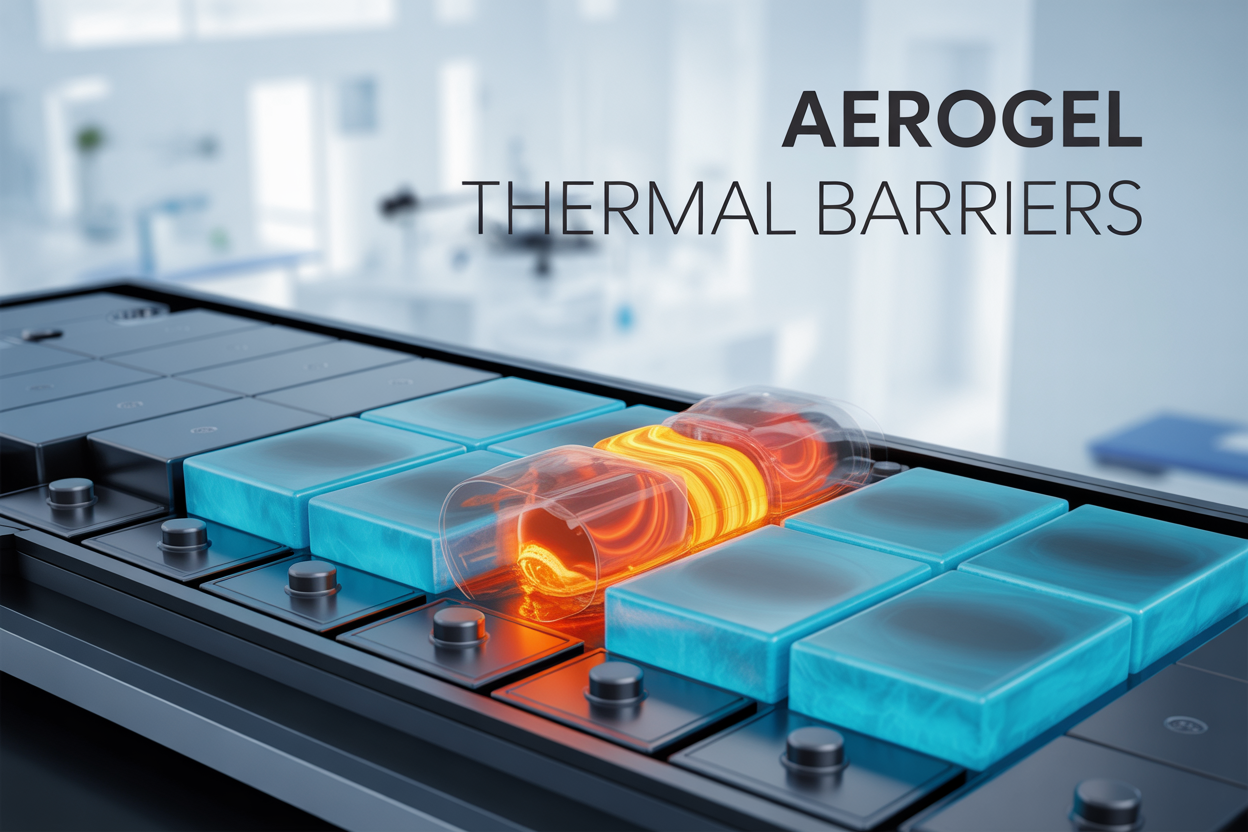
Electric vehicle battery fires present a serious safety challenge that could undermine consumer confidence in the transition to cleaner transportation. When lithium-ion battery cells experience thermal runaway – a dangerous chain reaction of heat and chemical breakdown – the fire can spread rapidly through an entire battery pack, creating life-threatening situations for drivers and first responders.
This analysis targets automotive engineers, EV manufacturers, safety professionals, and industry stakeholders who need to understand how advanced materials can address these critical safety challenges. As the EV market expands rapidly, thermal-runaway barriers using aerogel technology have emerged as a proven solution for containing battery fires and protecting lives.
The discussion will examine how thermal runaway creates cascading safety risks in EV battery systems and explore the science behind aerogel’s exceptional thermal protection properties. The analysis will also cover real-world applications across different vehicle categories, from entry-level EVs to high-performance luxury models, demonstrating how these ultra-lightweight thermal barriers can prevent fire propagation while maintaining the energy density and performance standards consumers expect.
Understanding Thermal Runaway and Its Life-Threatening Risks
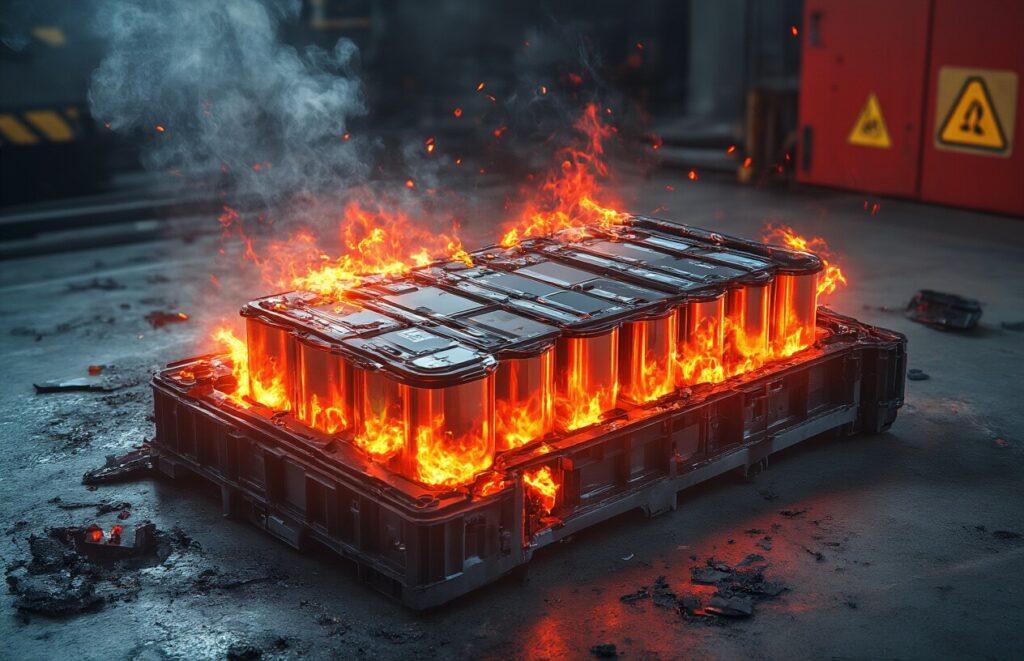
How thermal runaway creates dangerous feedback loops of heat and chemical reactions
Thermal runaway begins when a lithium-ion battery cell experiences abuse through heating, crushing, penetration, or overcharge, triggering chemical reactions that replace normal electrochemical processes. These exothermic reactions generate heat and toxic flammable gases, with the released heat accelerating the chemical decomposition in a self-sustaining cycle. As temperatures reach 150°C-200°C, the organic electrolyte decomposes, the separator structure collapses, and electrodes make contact, causing internal short circuits that catapult cells to even higher temperatures.
Why battery fires are harder to extinguish and more likely to reignite than gas car fires
Battery cells experiencing thermal runaway remain contained within multiple layers of metal and aluminum casings, making it almost impossible to direct water directly onto the fire’s source. The decomposition process releases heavy-metal dust particles, followed by white vapor clouds of toxic, flammable gases that can deflagrate explosively without warning. These structural barriers and continuous gas generation create suppression challenges that traditional firefighting methods struggle to overcome effectively.
How thermal propagation spreads from one cell to the entire battery pack
Heat propagation occurs through conduction as thermal energy transfers from affected cells to neighboring cells within densely packed battery modules. Heat released by one cell experiencing thermal runaway begins to affect nearby battery cells, creating a cascade throughout the module. This thermal spread can quickly escalate from individual cell failures to the entire battery pack, with each affected cell contributing additional heat and flammable gases to the dangerous feedback loop.
Aerogel Technology: The Science Behind Superior Thermal Protection
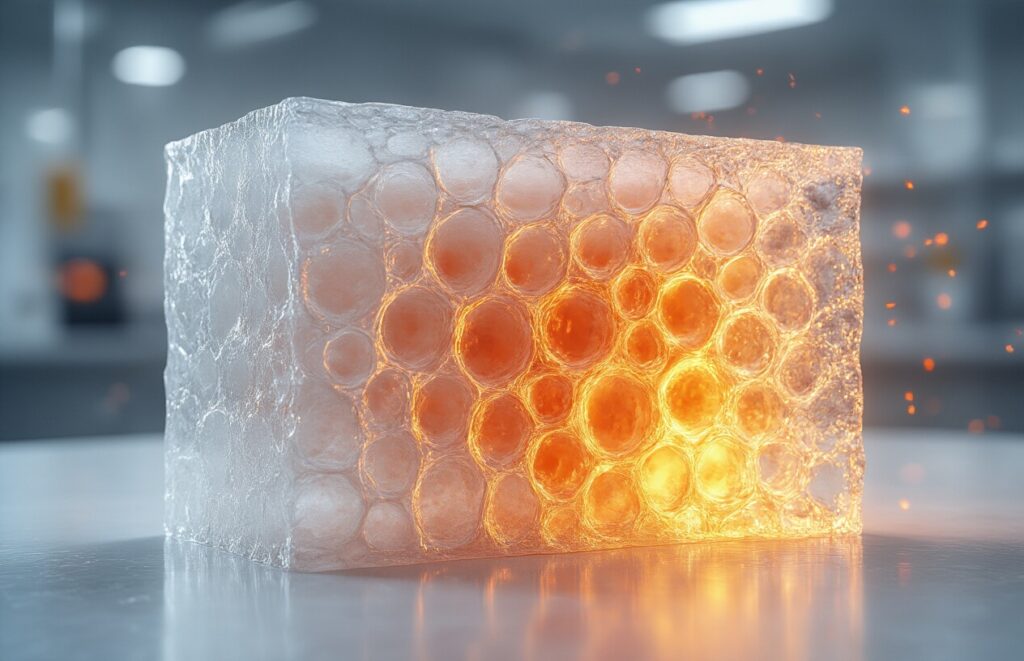
How microscopic air pockets create exceptional insulation properties
Aerogels achieve their extraordinary thermal insulation performance through their unique three-dimensional nanostructure composed of microscopic air pockets. These materials have extremely low density and thermal conductivity, with the nanoporous structure effectively minimizing heat transfer via conduction, convection, and radiation.
Why aerogels maintain performance while staying ultra-lightweight
The exceptional thermal protection capabilities of aerogels stem from their ability to trap air within nanoscale pores while maintaining structural integrity at remarkably low densities. This combination allows aerogels to deliver superior insulation performance without adding significant weight to battery systems, making them ideal for applications where both thermal management and weight optimization are critical factors in electric vehicle design.
Life-Saving Applications Across All EV Categories

Entry-level EVs meeting critical safety standards like GB38031 and ECE regulations
The PyroThin technology platform enables entry-level electric vehicles to comply with stringent industry thermal-runaway standards, including China’s GB38031 and the United Nations’ ECE/TRANS/180/Add. 20 regulations. These aerogel-based solutions provide manufacturers with a cost-effective pathway to meet mandatory safety requirements while maintaining competitive pricing for mass adoption.
Mass-market vehicles with optimized solutions for LFP and high-nickel NMC batteries
Previously established safety standards now extend to diverse battery chemistries in mass-market vehicles, where the PyroThin portfolio spans multiple thickness and stiffness profiles. These solutions accommodate both lithium iron phosphate and high-nickel NMC battery configurations, enabling rapid optimization and volume production scaling for mainstream automotive applications.
Luxury and performance vehicles handling extreme thermal stress from 800V+ fast charging
High-performance electric vehicles utilizing ultra-fast charging systems operating at 800V and above generate extreme thermal and mechanical stress conditions that demand superior protection. PyroThin cell pads deliver exceptional performance in ultrathin, featherweight formats specifically engineered for energy-dense battery packs.
Plug-in hybrids benefit from resilient mechanical performance throughout the battery lifecycle.
Plug-in hybrid electric vehicles require thermal barriers with resilient mechanical performance characteristics tuned directly from the aerogel material composition. These solutions maintain cell health throughout the complete battery pack lifecycle, addressing the unique operational demands of hybrid powertrains.
How Aerogel Barriers Stop Thermal Runaway Propagation
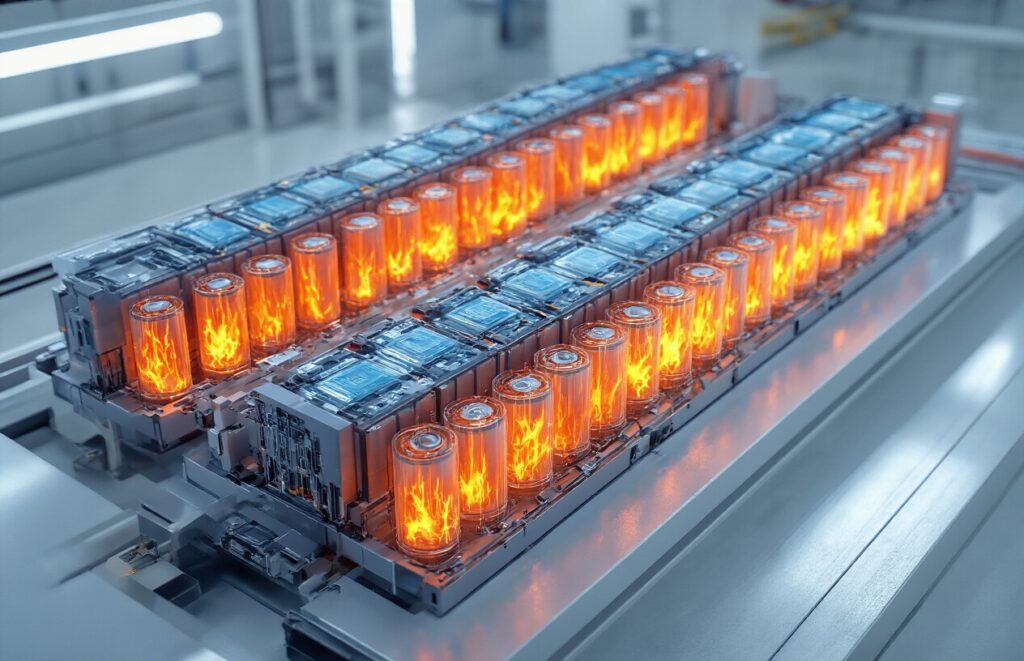
Cell-to-cell thermal barrier protection prevents catastrophic spread.
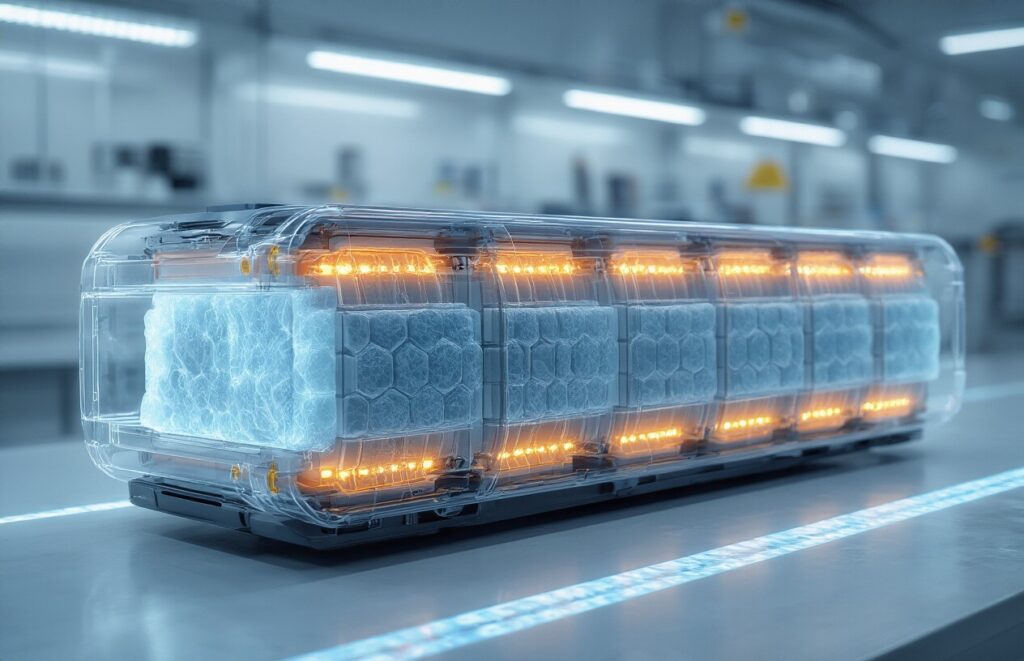
PyroThin thermal barriers create an effective first line of defense against thermal runaway by withstanding temperatures up to 1400°C while maintaining their protective properties even under compression. These aerogel-based barriers utilize engineered nanoporosity, with pores 10,000 times smaller than those in traditional insulation materials, allowing thermal conductivity to actually improve when compressed, as air with worse thermal properties gets squeezed out.
System-level approach ensuring proper cell health maintenance.
Beyond thermal protection, PyroThin barriers function as springy compression pads that manage daily charge/discharge cycles and cell swelling over time. The silica-polymer chains formed during aerogel curing act as billions of elastic nano-springs, maintaining the pack’s state of health while minimizing premature cell degradation and potential safety risks throughout the vehicle’s lifetime.
Creating isolated thermal events instead of vehicle-destroying fires
Testing demonstrates that PyroThin can prevent cell-to-cell thermal propagation entirely, rather than merely delay it. In controlled tests with two 62 Ah prismatic cells separated by compressed PyroThin barriers, adjacent cells reached only 130°C peak temperatures without entering thermal runaway, effectively isolating thermal events at the cellular level and preventing catastrophic battery pack failures.
Real-World Implementation and Market Growth

Major Automaker Adoption by General Motors, Toyota, and Audi
Now that thermal runaway barriers have proven effective, major automotive manufacturers, including General Motors, Toyota, and Audi, have embraced aerogel technology for their electric-vehicle battery systems. This widespread adoption by industry leaders demonstrates the critical role aerogels play in enhancing vehicle safety standards across global markets.
Rapid Market Expansion from $7 Million to Over $110 Million in Sales
Previously limited to niche applications, the aerogel market for EV batteries has experienced explosive growth, with Aspen Aerogels reporting a remarkable 90% year-on-year revenue increase in FY2024. Their EV thermal barrier segment alone expanded 2.8 times since 2023, while the broader aerogels market reached over $1 billion in 2025, driven primarily by electric vehicle applications that now dominate future market projections.
Balancing Safety with Performance and Efficiency

Maintaining energy density with ultra-thin 1-4 millimeter barrier thickness
With this understanding of thermal runaway propagation mechanisms established, aerogel thermal barriers achieve optimal safety protection through remarkably thin applications of just a couple of millimeters. This minimal thickness requirement ensures that the aerogel maintains the vehicle’s energy density while providing superior thermal insulation.
Preserving the driving range while enhancing safety protection
The aerogel’s exceptional thermal protection capabilities do not compromise the operational range of electric vehicles. The material’s 99% air composition and extremely porous structure, made mostly of silicon and oxygen, create flexible insulation that prevents heat transfer between battery cells without adding significant weight or bulk to the battery system, thereby preserving the vehicle’s driving performance.
Thermal runaway remains one of the most critical safety challenges facing the electric vehicle industry, but aerogel technology has emerged as a proven solution that can literally save lives. PyroThin thermal barriers demonstrate how advanced materials engineering can effectively stop thermal propagation at the cell level, transforming potentially catastrophic battery fires into manageable, isolated events. With automakers like General Motors, Toyota, and Audi already implementing these solutions across their EV lineups, the technology has moved beyond experimental phases into real-world applications that protect drivers and first responders.
The rapid market growth—from $7 million in sales in 2021 to an expected $220+ million in 2024—reflects the industry’s recognition that thermal safety cannot be compromised. As manufacturers continue balancing energy density with protection requirements, aerogel barriers offer an optimal solution that delivers life-saving performance without significantly impacting vehicle range or efficiency. With production capacity expanding to supply materials for over two million EVs annually, aerogel thermal barriers are positioned to become standard safety equipment, ensuring that the transition to electric mobility prioritizes both innovation and human safety.