

Why Aerogel Is Critical for Liquid Hydrogen Storage
If you’re working in hydrogen energy, aerospace, or clean fuel infrastructure, you already know that storing liquid hydrogen is one of the hardest engineering problems on the table. The fuel sits at -253°C, and even a tiny heat leak can cause it to boil off and escape into the atmosphere — wasted energy, lost fuel, and real safety risks.
That’s exactly why aerogel insulation has become a serious talking point among engineers and energy developers. It’s one of the few materials that can handle the extreme cold of liquid hydrogen storage without adding bulk or compromising system integrity.
In this post, we’ll break down three things: why liquid hydrogen storage creates such a brutal insulation challenge, how aerogel’s unique structure makes it the right fit for cryogenic tanks, and where aerogel insulation is already delivering results across hydrogen applications today.
The Unique Challenge of Storing Liquid Hydrogen
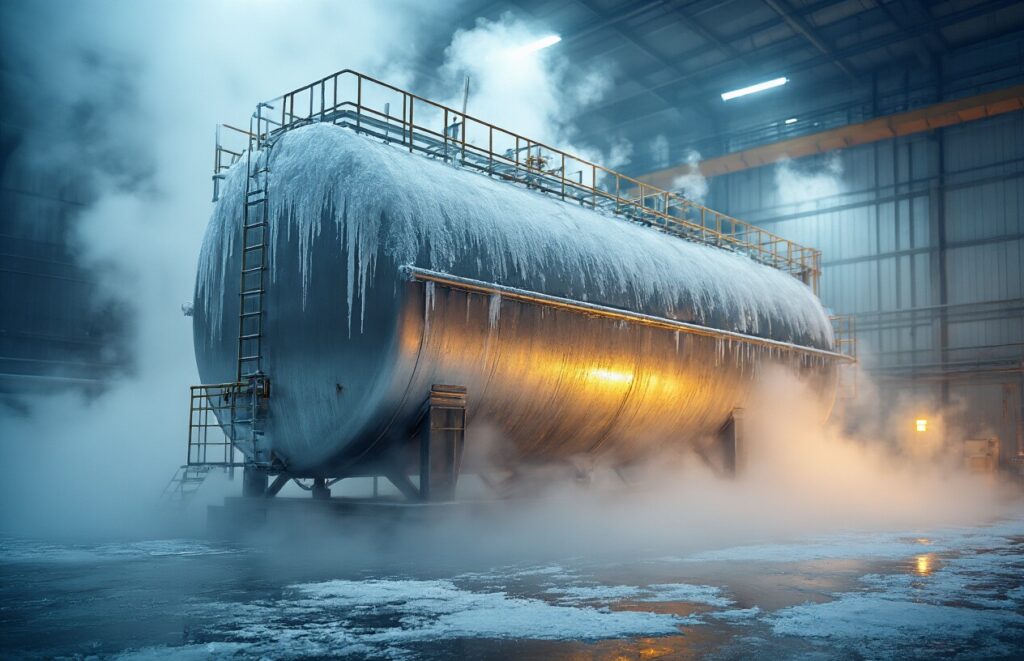
Extremely Low Temperatures Required for Liquid Hydrogen Storage
Liquid hydrogen must be stored at approximately −253°C, making it one of the most cryogenically demanding substances to handle. This extreme requirement places enormous pressure on storage systems to maintain thermal stability. High-performance insulation has long been inaccessible, either too expensive, too bulky, or too difficult to deploy — a critical gap when consistently managing such unforgiving temperature thresholds.
High Risk of Boil-Off and Energy Loss Without Proper Insulation
Without adequate insulation, even minor heat ingress triggers rapid boil-off, wasting stored energy and compromising system integrity. Solving pressing global challenges includes slashing energy waste, and hydrogen storage is a prime example where thermal inefficiency carries real consequences. With this in mind, next, we’ll see why conventional insulation materials consistently fall short of meeting these extreme cryogenic demands
Why Conventional Insulation Materials Fall Short
| Limitation | Impact on Liquid Hydrogen Storage |
| Too expensive | Limits scalability and deployment |
| Too bulky | Reduces system efficiency |
| Hard to deploy | Increases operational complexity |
Conventional materials simply cannot bridge the performance gap required for reliable liquid hydrogen containment.
What Makes Aerogel the Ideal Insulation for Liquid Hydrogen

Exceptional Thermal Performance at Cryogenic Temperatures
DashamLabs is advancing next-generation silica aerogel insulation, specifically engineered to meet the extreme demands of cryogenic environments. Their silica aerogel flexible sheets maintain structural and thermal integrity at the ultra-low temperatures required for liquid hydrogen storage, where conventional insulation materials often fail.
Ultra-Low Thermal Conductivity and Lightweight Flexible Form Factors
With this in mind, silica aerogel delivers superior thermal resistance while remaining remarkably lightweight. DashamLabs’ flexible sheet format enables practical deployment across complex geometries, making it far more versatile than rigid traditional insulation solutions for real-world hydrogen storage applications.
How Aerogel Prevents Boil-Off and Protects Storage Integrity
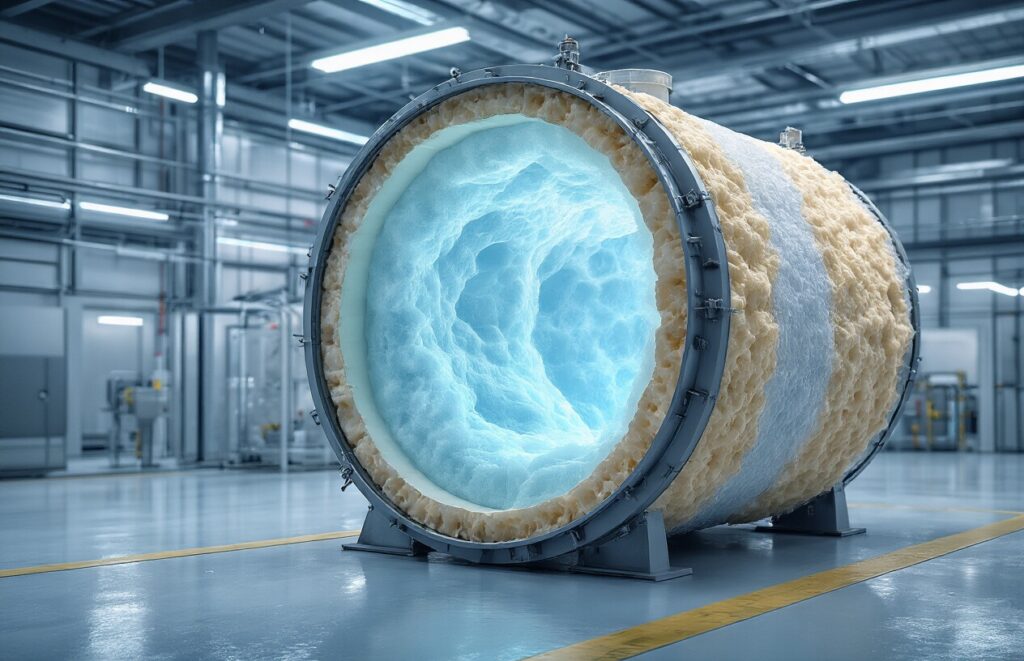
Minimizing Heat Transfer to Maintain Cryogenic Conditions
Aerogel insulation plays a decisive role in drastically reducing heat transfer into liquid hydrogen storage systems. By maintaining ultra-low cryogenic temperatures, aerogel’s exceptional thermal resistance keeps hydrogen in its liquid state far longer than conventional insulation materials. With this in mind, next, we’ll see how this directly impacts energy efficiency and operational reliability.
Reducing Energy Waste and Hydrogen Loss During Storage
Previously, energy waste from boil-off represented a high operational cost. Aerogel insulation combats this by slashing unnecessary energy consumption, ensuring stored hydrogen remains stable and usable. This contribution extends beyond economics — it directly supports climate change mitigation by empowering industries to operate more sustainably, reducing both resource loss and environmental impact across the entire hydrogen storage lifecycle.
Key Applications Where Aerogel Insulation Delivers Results
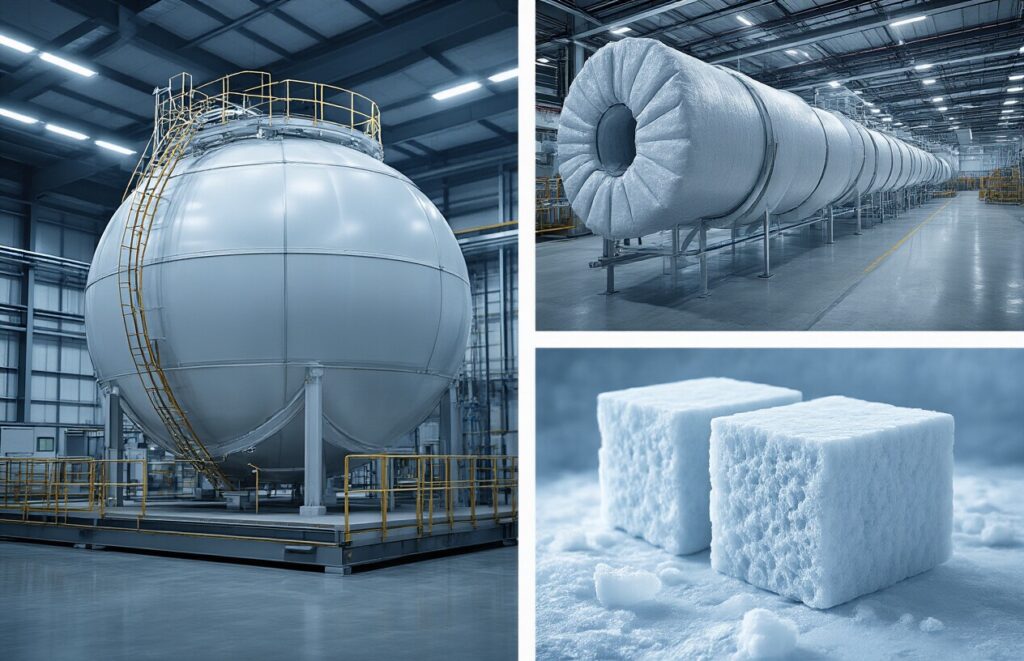
Industrial-Scale Liquid Hydrogen Storage Tanks
Aerogel insulation proves indispensable in large-scale storage environments, particularly within the oil & gas and process systems industries. Its ultra-low thermal conductivity minimizes heat ingress into cryogenic tanks, directly reducing boil-off losses and preserving stored liquid hydrogen over extended periods. For facilities managing high-volume hydrogen inventories, deploying aerogel across tank surfaces and piping systems translates into measurable gains in operational efficiency and safety.
Hydrogen Transport and Cold Chain Logistics
With this in mind, aerogel’s performance extends seamlessly into cold chain and mobility applications. Maintaining cryogenic temperatures throughout hydrogen transport demands insulation that is both thermally robust and practical to integrate. Aerogel meets these requirements across distribution vehicles and logistics infrastructure, ensuring hydrogen reaches end users in optimal condition.
Aerospace and Mobility Use Cases Requiring Lightweight Insulation
Previously, weight constraints ruled out many conventional insulation materials in aerospace contexts. Aerogel’s exceptionally low density makes it a viable solution for aerospace platforms and mobility applications where every gram matters, delivering reliable cryogenic insulation without compromising structural or performance requirements.
Overcoming the Barriers to Widespread Aerogel Adoption
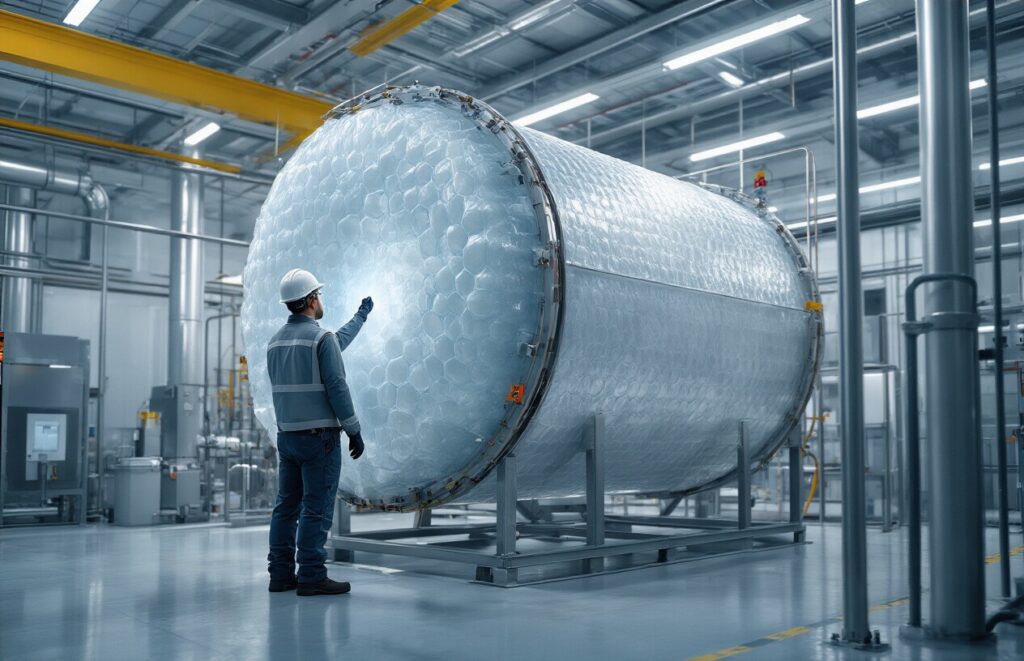
Historical Challenges of High Cost and Limited Scalability
Historically, high-performance insulation has remained inaccessible to many industries due to three persistent barriers:
- Prohibitive costs that limited adoption to niche applications
- Bulkiness that complicates deployment in space-sensitive systems
- Complex installation requirements demanding specialized labor
These constraints prevented aerogel from reaching its full potential across liquid hydrogen storage and beyond.
Process Innovations Making Aerogel More Accessible and Affordable
Now that we have covered the historical limitations, DashamLabs is directly addressing these barriers through next-generation process innovation. Their advancements make silica aerogel insulation cost-efficient, scalable, and straightforward to deploy across multiple industries. With this in mind, their flagship offering — flexible silica aerogel sheets — simplifies installation significantly, eliminating the complexity that previously made aerogel impractical for widespread use, and opening the door to broader adoption across the hydrogen economy.
The Future of Aerogel in the Hydrogen Economy

Growing Global Demand for Efficient Hydrogen Storage Solutions
Now that we have covered the practical applications of aerogel insulation, it is clear that global demand for efficient hydrogen storage is intensifying rapidly. As the hydrogen economy scales, the need for advanced insulation materials that minimize boil-off and preserve storage integrity becomes non-negotiable. Aerogel stands at the center of this demand, offering unmatched thermal performance that conventional materials simply cannot replicate at scale.
Role of Advanced Materials Innovation in Accelerating the Energy Transition
With this in mind, materials innovation is no longer peripheral — it is foundational to the energy transition. Companies like DashamLabs are transforming deep science into scalable, high-performance aerogel products, directly addressing challenges such as energy waste and climate change. Their fully Indian-patented aerogel technology exemplifies how breakthrough materials science can drive global impact, making aerogel insulation the natural, go-to choice for energy efficiency worldwide.
India’s Emerging Leadership in Scalable Aerogel Manufacturing for Global Markets
Previously, aerogel manufacturing was dominated by a handful of global players. That landscape is shifting. DashamLabs is positioning India as a global leader in advanced materials, with a clear mission:
- Solve real global challenges through scalable aerogel solutions
- Deliver lasting impact by making high-performance insulation accessible.
- Champion a “made in India, built for the world” philosophy that accelerates adoption across international hydrogen storage markets
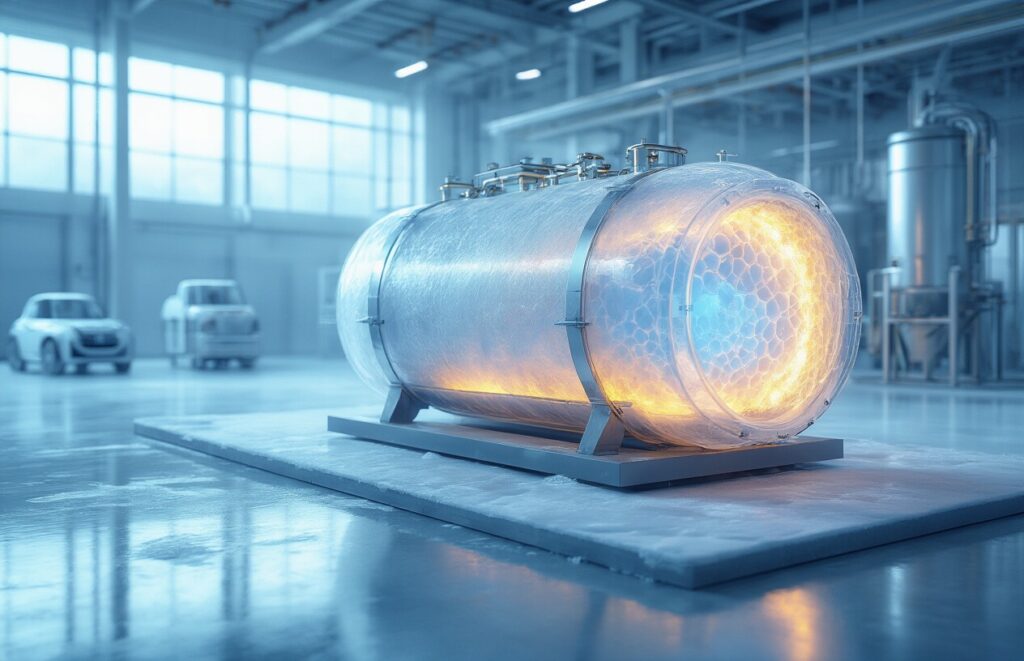
Liquid hydrogen holds enormous promise as a clean fuel — but only if we can store it reliably without significant energy loss. Aerogel insulation addresses this challenge directly. Its ultra-low thermal conductivity dramatically reduces boil-off, protects the integrity of cryogenic storage, and performs in demanding applications — from industrial storage tanks to aerospace systems. While cost and scalability have historically limited its adoption, advances in manufacturing are steadily removing those barriers, making aerogel a practical and compelling choice for the hydrogen economy.
The transition to hydrogen as a mainstream energy source depends on solving the hard engineering problems — and insulation is one of the most critical. Companies like DashamLabs are working to make high-performance aerogel insulation scalable, cost-efficient, and accessible across industries. If your operations involve liquid hydrogen storage or cryogenic systems, now is the time to explore how aerogel insulation can improve your efficiency, safety, and long-term sustainability goals.