
Circular Economy in Manufacturing: DashamLabs’ Approach to Sustainable Production
If you work in manufacturing and you’re tired of watching raw materials get used once and tossed, this one’s for you. Engineers, production managers, and sustainability leads are all starting to ask the same question: what happens after the metal gets machined? The circular economy in manufacturing offers a real answer — and DashamLabs is building its production model around it.
In this post, we’ll break down why the old “take-make-dispose” model is losing ground, how metal additive manufacturing fits naturally into a closed-loop system, and how reclaimed metal powders are changing what sustainable production actually looks like on the shop floor.
Understanding the Shift from Linear to Circular Manufacturing
The Problem with the Traditional Take-Make-Dispose Model
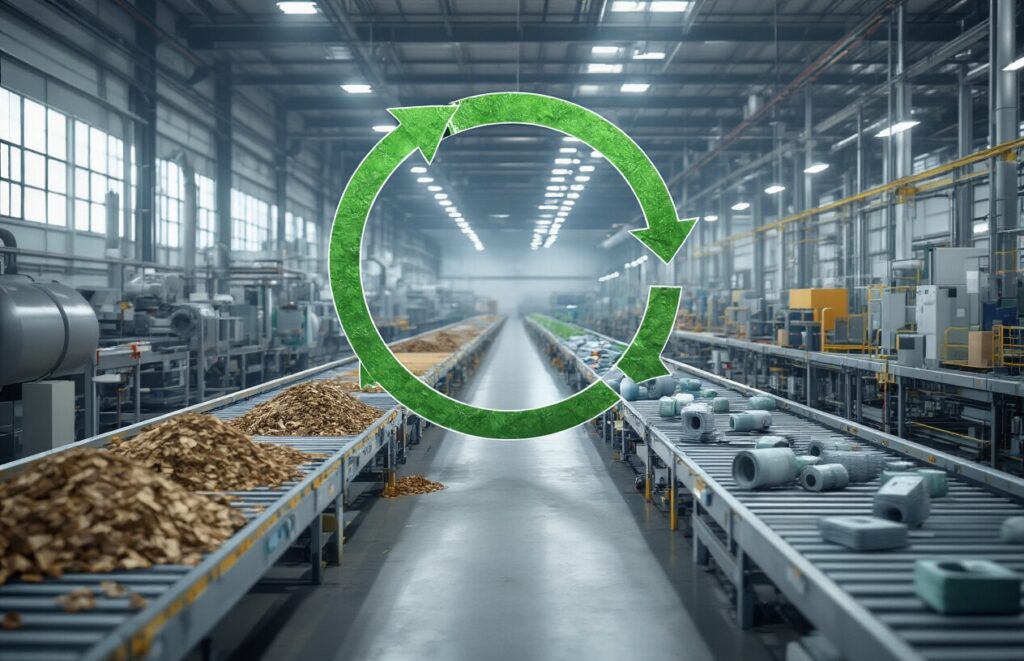
For decades, manufacturing has operated on a linear take-make-dispose model — extracting raw materials, producing goods, and discarding waste with little regard for resource regeneration. This approach depletes finite natural resources at an unsustainable rate, generating mounting waste and environmental damage. As reference models confirm, we are genuinely running out of critical virgin materials, making the continuation of this linear mindset not just irresponsible but economically untenable for future generations.
How Closed-Loop Systems Continuously Reuse and Recycle Resources
The circular economy replaces the linear pipeline with a production circle, where materials remain perpetually “in the loop.” Rather than ending at disposal, a product’s lifecycle feeds back into the system through continuous recycling, component renewal, and material reuse. Key pillars of this model include:
- Maximizing product lifecycles
- Reducing energy consumption and environmental impact
- Establishing virtuous cycles of continuous material recycling and renewal
- Creating smarter, more connected products that support resource tracking
Growing Regulatory and Market Pressure to Adopt Circular Practices
With this in mind, businesses are no longer transitioning voluntarily alone. Frameworks such as the WELL Building Standard v2 and initiatives from the World Green Building Council are formalizing circular-economy expectations across industries. Market-driven transparency — including Environmental Product Declarations (EPDs) and supply chain certifications — is becoming standard practice, pushing manufacturers to disclose material lifecycles and commit to eliminating hazardous substances from their production cycles.
Why Metal Additive Manufacturing is Ideal for a Circular Economy
A. Producing Complex Designs with Minimal Material Waste
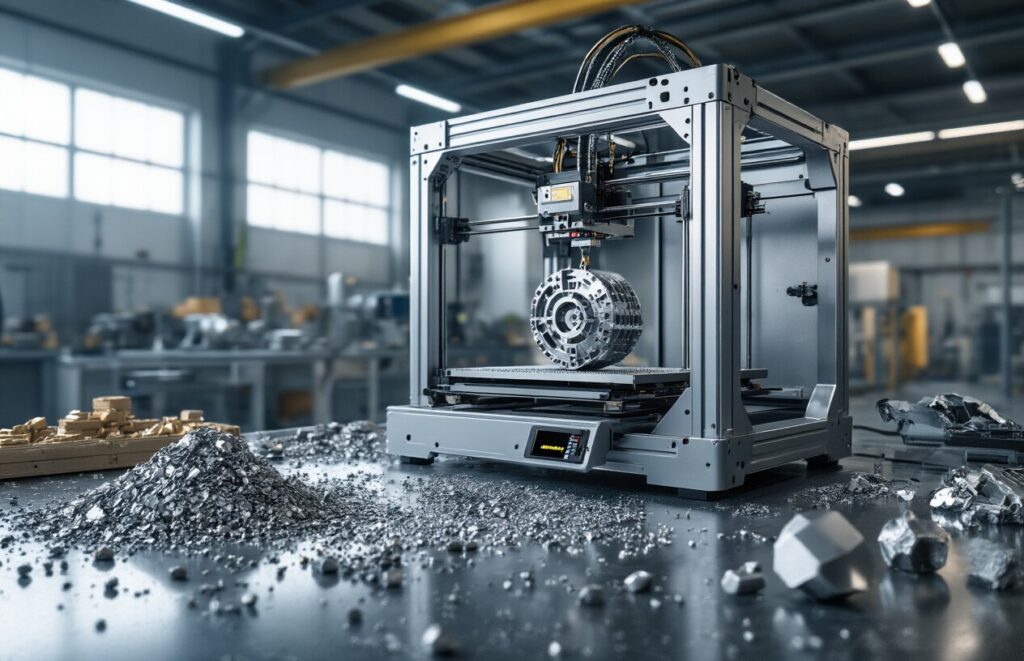
Metal additive manufacturing builds parts layer by layer, depositing material only where it is needed. This approach drastically reduces the excess material waste typically associated with traditional subtractive methods. As highlighted by CECIMO, additive manufacturing contributes directly to waste reduction, making it a powerful enabler of circular economy principles by rethinking how components are designed and produced from the ground up.
B. On-Demand Production to Reduce Inventory and Obsolescence
With this in mind, on-demand production is another key advantage. Rather than manufacturing large batches that risk becoming obsolete, metal additive manufacturing allows parts to be produced precisely when needed. This eliminates unnecessary inventory, reduces storage demands, and prevents material waste from outdated stock — all critical factors in supporting a leaner, more circular manufacturing model as outlined by industry leaders in additive manufacturing.
C. Flexibility and Customization for More Efficient, Sustainable Products
Now that we have covered waste reduction and on-demand production, flexibility and customization further strengthen the case for metal additive manufacturing in a circular economy. The technology supports novel design paradigms that enable more efficient, application-specific components. According to CECIMO, this innovation in design and business models allows manufacturers to deliver highly customized, optimized products while boosting re-manufacturing and repair activities — core pillars of sustainable, circular production.
The Power of Reclaimed Metal Powders in Sustainable Production
Sourcing Metal Waste from Aerospace, Automotive, and Electronics Industries
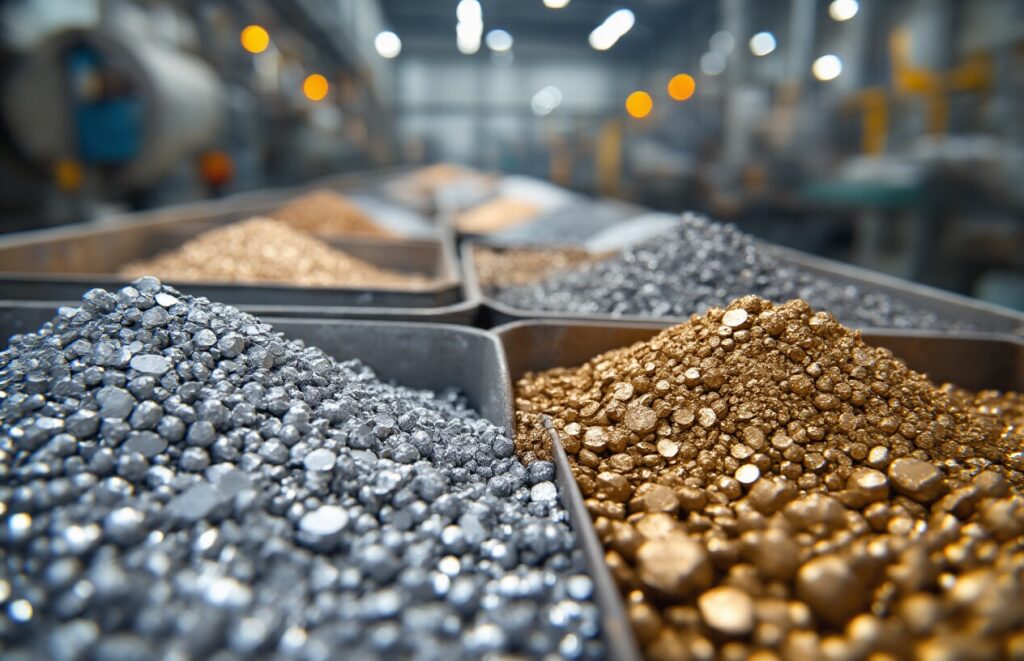
Reclaimed metal powders are derived from scrap generated across the aerospace, automotive, and electronics sectors — including end-of-life components, off-cuts, and machining swarf. Companies like 6K Additive and Continuum Powders have built entire production systems around this secondary feedstock, transforming what was once industrial waste into high-performance AM-ready powder. As Teemu Karhumaa of Tikomet Oy aptly noted, “scrap is the new gold” — a sentiment echoed across the industry as competition for quality secondary materials intensifies globally.
How Green Power and Sustainable Materials Reduce Carbon Footprint
With this in mind, the environmental gains are substantial. Research from University College London estimates that recycled steel produced via Electric Arc Furnace reduces greenhouse gas emissions by 86% and energy consumption by 85% compared to virgin production. Fraunhofer IMWS confirms that one tonne of recycled stainless steel scrap saves approximately 4.3 tonnes of CO₂. Companies like Sandvik and Continuum further amplify these savings by powering atomization with renewable energy sources, compounding carbon reductions across the entire production chain.
Meeting Stringent Quality Standards with Reclaimed Alloy Powders
| Standard/Initiative | Detail |
| AMS 7031 (SAE International) | Sets requirements for powder reuse and reconditioning |
| EOS supplier mandate | Requires ≥30% recycled feedstock, achieving ~25% CO₂ reduction |
| Continuum OptiPowder 718 | First Velo3D Sapphire-qualified alloy from 100% recycled feedstock |
Reclaimed powders must meet the same exacting specifications as virgin materials. Suppliers like 6K Additive and IperionX employ controlled recycling processes specifically designed to satisfy aerospace-grade standards, ensuring consistent chemistry, particle morphology, and cleanliness — proving that sustainability and performance are not mutually exclusive.
DashamLabs Approach to Circular Manufacturing Through the M2P Process
Converting Recycled Metal Waste into High-Quality OptiPowders
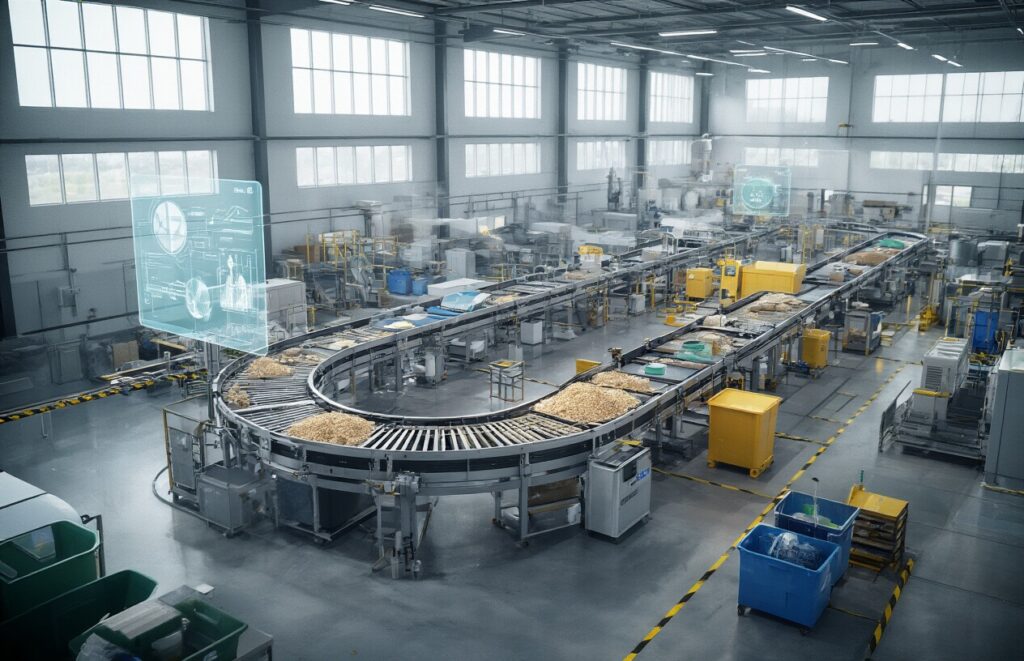
DashamLabs leverages the M2P process to transform certified metal scrap — including aerospace- and energy-grade waste — directly into high-performance OptiPowders. Rather than relying on virgin raw materials or multiple energy-intensive remelting cycles that risk alloy degradation and oxidation, this single-step conversion preserves compositional integrity while dramatically reducing processing waste. The result is a premium metal powder feedstock built from reclaimed material without compromising mechanical performance.
The Melt-to-Atomization Process for Consistent Powder Production
At the core of the M2P process is a DC plasma heat source capable of exceeding 10,000°C, rapidly and fully melting even high-melting-point superalloys in one controlled step. The molten stream is then atomized using a precisely calibrated high-pressure gas jet, breaking the liquid metal into fine droplets that solidify into highly spherical powder particles. Key process parameters — plasma arc intensity and atomizing gas pressure — are finely tuned to control:
- Particle size distribution
- Sphericity and surface smoothness
- Cooling rates and solidification behavior
Rigorous Quality Control Ensuring Performance-Ready Materials
With this in mind, consistent powder quality demands more than precise atomization — it requires systematic characterization at every stage of production. DashamLabs evaluates each OptiPowder batch on critical metrics, including particle size distribution (PSD), chemical composition, and flowability, to ensure compliance with ASTM-grade standards. Research confirms that recycled-material powders produced by gas atomization can achieve tensile strength exceeding that of standard virgin-material equivalents, demonstrating that rigorous quality control transforms reclaimed metal waste into genuinely performance-ready manufacturing inputs.
Real-World Impact and Industry Collaboration for a Greener Future
Partnering with Governments and Industry Leaders to Drive Change
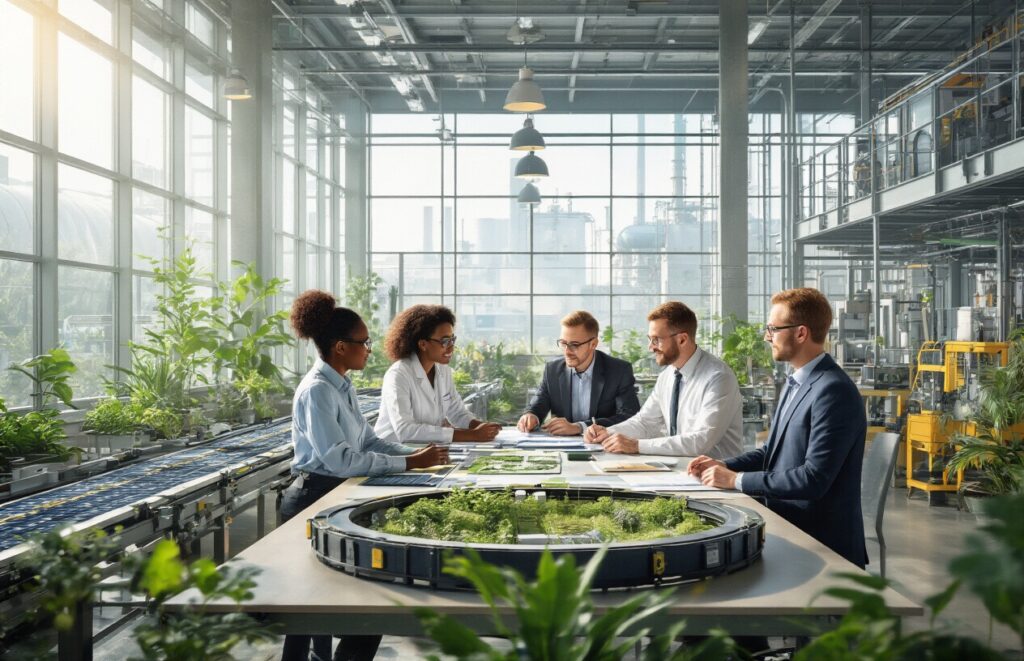
Circular manufacturing cannot thrive in isolation. Successful circular business models depend on robust collaboration networks that include government agencies, legislators, suppliers, customers, investors, and NGOs. DashamLabs actively engages these stakeholders to align circular practices with political standards, legislation, and regulations — accelerating industry-wide adoption rather than leaving individual manufacturers to navigate the transition alone.
Supporting Local Green Economy Initiatives and Job Creation
With this in mind, raising community awareness of waste as a valuable resource drives momentum in the local green economy. Circular initiatives create new roles in material recovery, quality handling, and technology support, generating employment while reducing environmental impact. Bridging social networks across sectors builds the trust and shared goals necessary for communities to genuinely benefit from circular manufacturing transitions.
The Role of On-Site Foundries in Achieving Fully Closed-Loop Systems
Previously, we explored DashamLabs’ M2P process, and on-site foundry capabilities represent the critical final link in closing that loop. By keeping reclaimed metal powders within controlled, localized environments, contamination risks are minimized, transportation burdens are reduced, and material quality is preserved. This infrastructure enables manufacturers to continuously narrow and slow resource loops, realizing the circular principle of keeping raw materials cycling indefinitely within the system.
Key Business Benefits of Adopting Circular Manufacturing Practices
Cutting Material Costs Through Reclaimed Resource Utilization
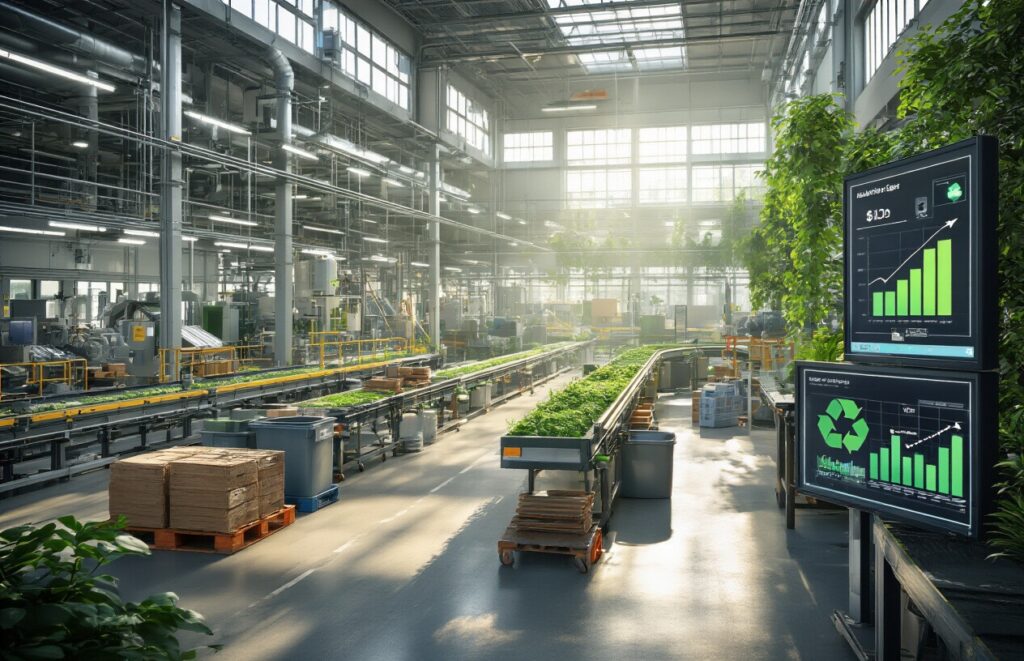
Now that we have covered DashamLabs’ M2P process and its real-world impact, it’s worth examining what these circular practices mean for your bottom line. Using reclaimed metal powders significantly reduces material costs, as sourcing from industrial waste streams is far less expensive than procuring virgin raw materials. This cost advantage directly improves profitability, giving manufacturers a measurable financial incentive to adopt circular models alongside the environmental benefits.
Strengthening Brand Reputation with Environmentally Conscious Consumers
With this in mind, consider that more than 40% of manufacturers report sustainability demands being driven by customers. Companies embracing circular practices attract environmentally conscious consumers, differentiating their brand in an increasingly competitive market. Circular manufacturing signals responsibility and innovation, strengthening customer relationships and long-term loyalty.
Staying Ahead of Evolving Sustainability Regulations and Avoiding Penalties
Previously, I’ve highlighted how regulations like extended producer responsibility and the EU Corporate Sustainability Reporting Directive are reshaping industry expectations. Manufacturers adopting circular practices position themselves ahead of these evolving requirements, avoiding potential penalties and compliance costs. Proactively embedding circularity into operations transforms regulatory pressure into a strategic advantage, ensuring business continuity as sustainability standards continue to tighten globally.
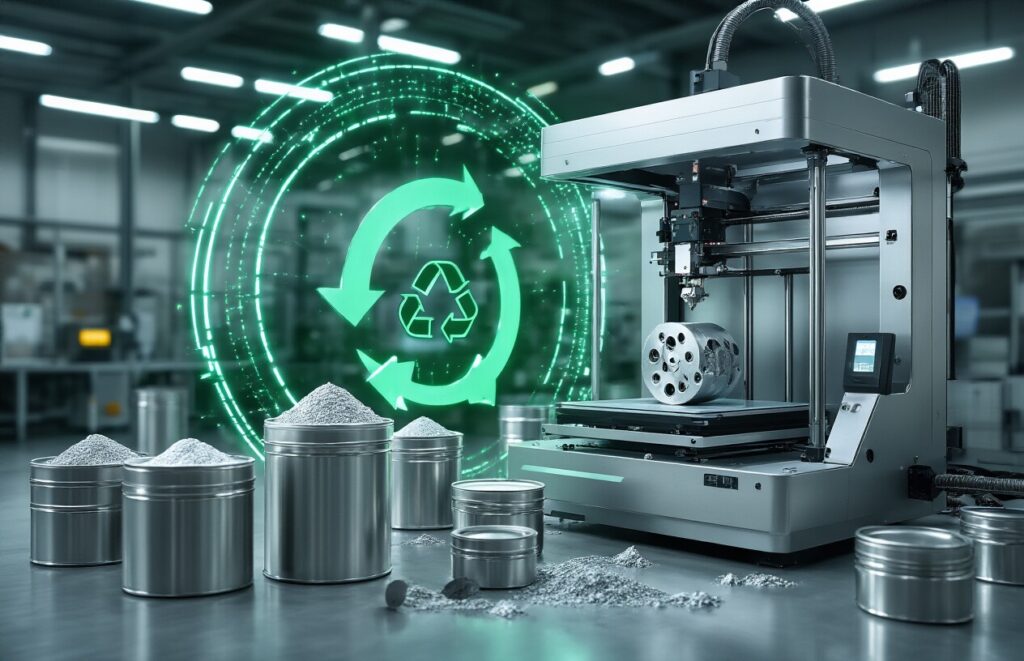
The shift from linear to circular manufacturing is no longer a distant goal — it is happening now, and metal additive manufacturing is at the forefront of this transformation. By using reclaimed metal powders and innovative processes such as DashamLabs’ M2P technology, manufacturers can significantly reduce waste, lower material costs, and build a production model that is both economically and environmentally responsible. The real-world business benefits — from cost reduction and regulatory compliance to improved brand reputation — make circular manufacturing a smart and necessary choice for forward-thinking industries.
As technology continues to advance and global collaboration grows, the adoption of circular practices will only accelerate. Whether you are in aerospace, automotive, or electronics, now is the time to explore how circular manufacturing can reshape your production strategy. Partnering with innovators committed to sustainable solutions is the first step toward building a more resilient and greener industrial future.