

Aerogel has been floating around NASA labs and cutting-edge construction projects for decades. However, most manufacturers, builders, and engineers still can’t get their hands on it without breaking the bank. That’s the gap DashamLabs is working to close.
This post is for engineers, builders, product developers, and anyone curious about advanced materials who wants to understand what aerogel actually is, why it’s been so hard to produce at scale, and what a localized production model could mean for their industry.
Here’s what we’ll cover: how aerogel works and why it’s considered a “space-age” material, the breakthrough one-pot production method that slashes manufacturing time from 12 hours to 5, and how DashamLabs is building a scalable, customizable aerogel production line to bring this material within reach for everyday applications.
Understanding Aerogel: The Space-Age Material
Key Properties That Make Aerogel Exceptional
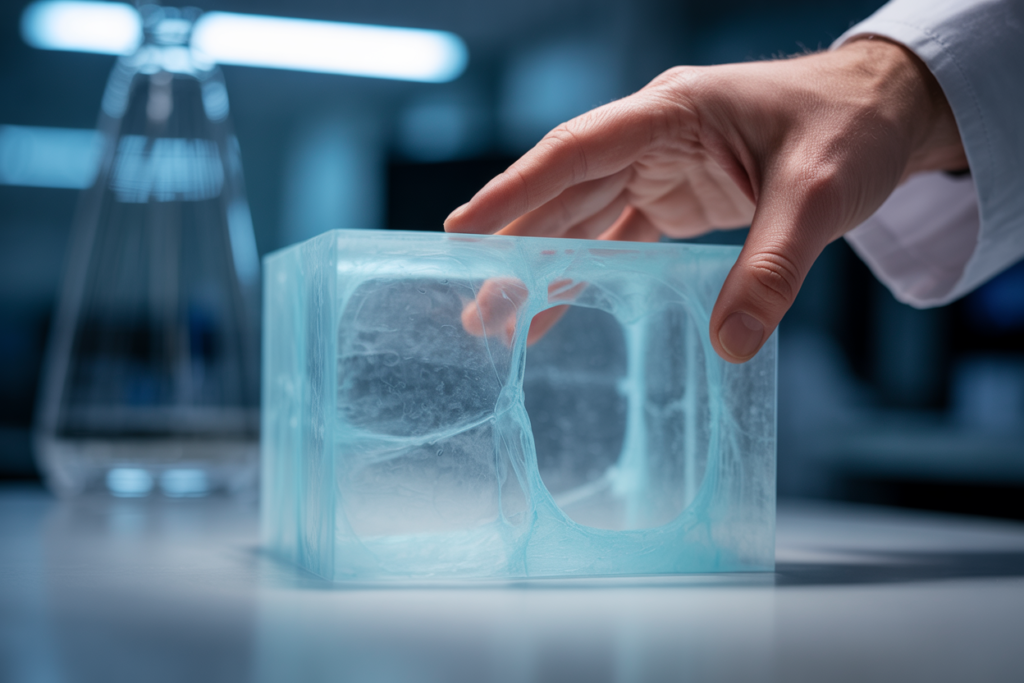
Invented by S. Kistler in the early 1930s, aerogel is a nanoporous material composed of approximately 99.2% air. Its extraordinary properties include ultra-low density (~0.003–0.5 g cm⁻³), high surface area (~500–1200 m² g⁻¹), and porosity reaching up to 99.8%. These characteristics give aerogel remarkable thermal, acoustic, and dielectric insulating capacity, making it suitable for applications ranging from catalysis and energy storage to environmental cleanup and biomedical uses.
Historical Uses by NASA and Space Programs
Silica aerogel, the most common variant, gained significant attention for its high thermal insulation and optical transparency. With this in mind, next, we’ll see how its space-age reputation translated into early terrestrial uses.
Early Applications in Construction and Insulation
Aerogel’s tunable surface chemistry and availability in various forms — monoliths, powders, beads, sheets, and coatings — made it a compelling insulation material. However, early production relied on costly supercritical drying processes, limiting widespread adoption in construction until alternative methods emerged.
The Problem With Traditional Aerogel Production
Why Current Manufacturing Is Slow and Costly
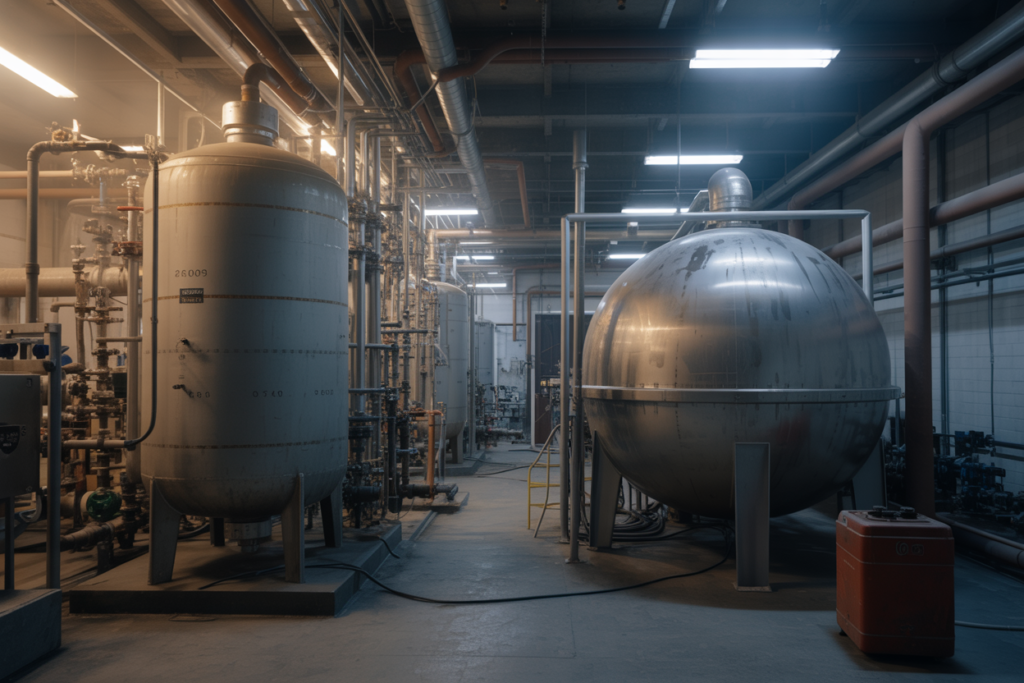
Traditional aerogel production relies heavily on supercritical drying, a technology that commands 70.6% of the market but is notoriously energy-intensive, time-consuming, and difficult to scale economically. The complex fabrication process requires specialized equipment and raw materials, making aerogel products significantly more expensive than conventional insulators like fiberglass or mineral wool. Critically, production costs do not decrease with volume, trapping manufacturers in a cycle where scaling up offers little financial relief.
The Heavy Reliance on Chemical Solvents
Supercritical drying extracts solvents from aerogel pores using supercritical fluids, and high-temperature variants use organic solvents to minimize shrinkage. This deep dependence on chemical solvents adds cost, safety considerations, and environmental burden to every batch produced. Efforts like Amsen Technologies’ aqueous-based process aim to reduce alcohol use, but solvent reliance remains a defining challenge across the industry.
How Market Dominance Keeps Prices High
With North America holding 44.1% of the global market share and established players like Aspen Aerogels and Cabot Corporation controlling large-scale production, smaller markets face limited supply and elevated procurement costs. Supply chain constraints further restrict availability, keeping prices high for price-sensitive industries and developing regions where upfront costs drive purchasing decisions over long-term energy savings.
The Breakthrough: Empa’s Revolutionary One-Pot Method

How the One-Pot Method Eliminates Full Solvent Exchange
Empa’s one-pot synthesis method represents a fundamental departure from conventional aerogel production. By co-gelling silicic acid directly with biopolymers like chitosan in aqueous media, the process eliminates the need for full solvent exchange — a traditionally time-consuming and resource-intensive step. The resulting three-dimensional semi-interpenetrating network forms simultaneously, merging structural reinforcement and gelation into a single, streamlined reaction vessel without compromising the aerogel’s ultra-low thermal conductivity.
Cutting Production Time From 12 Hours to Just 5
With this in mind, the efficiency gains from this approach are substantial. Traditional multi-step protocols require prolonged solvent exchange cycles, often significantly extending production timelines. The one-pot aqueous-based route condenses these stages, dramatically reducing processing time. Catalyst mixtures — specifically tuned through gelation pH — play a decisive role here, controlling the silica network’s cluster-cluster aggregation kinetics and enabling faster, more predictable gel formation while preserving the mechanical flexibility and yield strength of the final composite aerogel.
Building a Scalable Aerogel Production Line
Moving From Lab-Scale Tests to Industrial Production
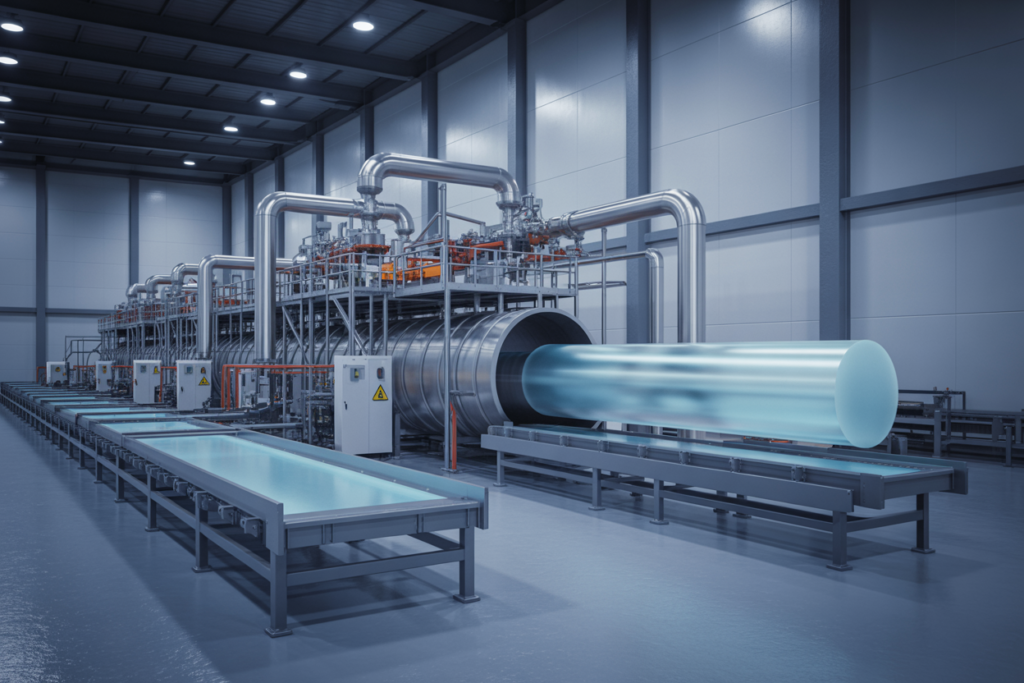
Scaling aerogel production from controlled laboratory environments to full industrial output is one of the most critical engineering challenges in the field. Research efforts have targeted a production capability of 50 liters of solvent-exchanged particles per day and up to 2,000 liters of aerogels per year, requiring purpose-built gelation plants, solvent exchange systems, and a 64-liter autoclave equipped with integrated automated drying software — a massive leap from benchtop experimentation.
How a Continuous Tunnel-Based Process Works
With this in mind, next, we’ll see how modular plant design enables true scalability. Fraunhofer UMSICHT pioneered a process that uses supercritical CO₂ to consolidate multiple production steps into a single streamlined workflow, eliminating the need for chlorine-containing hydrophobing agents and mineral acids. This modular architecture allows manufacturers to expand capacity incrementally, with a pilot plant targeting 5,000 tonnes per year scheduled to begin operations, making mass-market aerogel production genuinely achievable across construction and lightweight applications.
Controlling Temperature and Residence Time for Perfect Results
Precise control over drying parameters — particularly temperature and residence time during supercritical drying — determines the final aerogel’s pore structure and thermal performance. Automated software integration into the autoclave systems ensures consistent, repeatable results at scale, yielding aerogel particles with:
- Low particle density
- Good flowability
- Thermal conductivity of 12–20 mW/(m·K) — far superior to conventional EPS or mineral wool insulation
Customizing Aerogel for Diverse Industry Needs
Using Additives to Tailor Material Properties
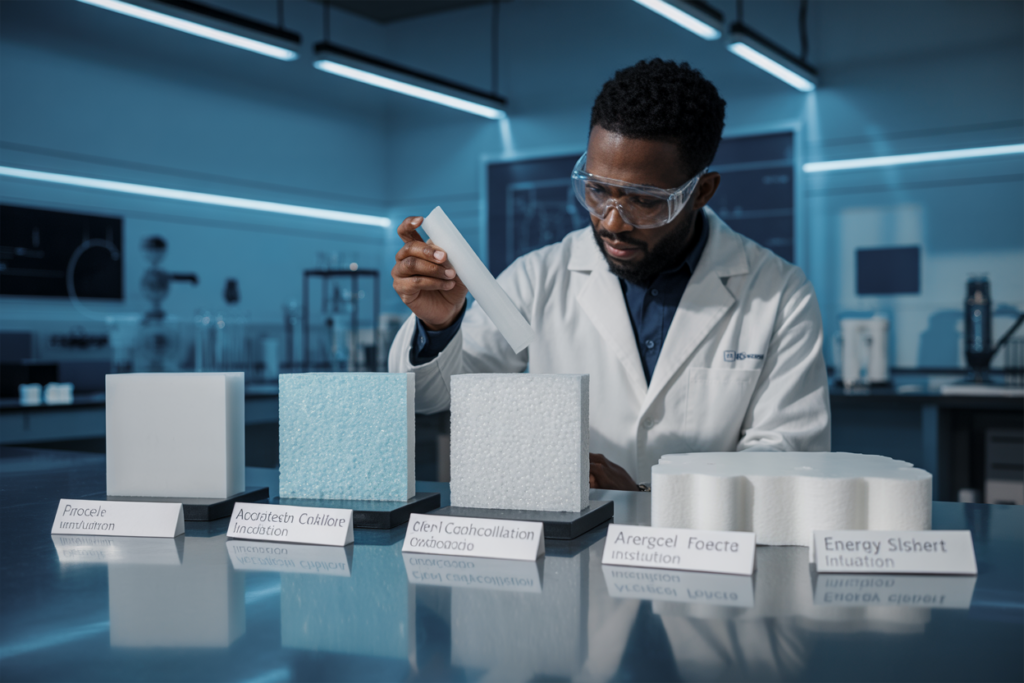
Aerogel’s versatility stems from its ability to be customized through compositional tailoring. By incorporating additives, manufacturers can engineer aerogels with specific properties — from enhanced mechanical strength and soundproofing to transparency and non-flammability — making them adaptable across wildly different application environments.
Achieving Hydrophobicity for Broader Applications
Water resistance is a critical property that can be unlocked through surface modification. Hydrophobic aerogels resist moisture absorption, dramatically expanding their usability in outdoor, industrial, and construction environments where exposure to humidity would otherwise compromise performance.
Meeting Demand From Construction, Automotive, and Industrial Sectors
| Sector | Key Aerogel Benefit |
| Construction | Superinsulation for buildings |
| Automotive | Ultralight, thermally insulating structural components |
| Industrial | Pipeline and refinery thermal management |
With this in mind, sectors ranging from automotive to construction are actively seeking aerogel solutions that combine lightweight properties with superior insulation — demands that customizable aerogel formulations are uniquely positioned to meet.
DashamLabs and the Mission to Localize Aerogel

Partnering With Industry Leaders to Scale Production
DashamLabs is actively forging partnerships with investment and technology partners to bring aerogel production to an industrial scale. Rooted in India’s legacy of elegant innovation, the company leverages a fully Indian-patented manufacturing breakthrough — enabling continuous production with a minimal environmental footprint, positioning India as a global leader in advanced materials.
Making Affordable Aerogel a Reality Within Three Years
With this in mind, DashamLabs is targeting a scalable, cost-efficient aerogel production line that makes high-performance insulation the natural choice across oil & gas, cold chains, mobility, and aerospace industries — transforming what was once an elite, lab-bound material into a widely accessible, real-world solution built for global deployment.
The Broader Impact of Accessible Aerogel on Global Markets
Now that we’ve explored DashamLabs’ roadmap, the broader implications become clear. By slashing energy waste and combating climate change, accessible aerogel insulation empowers industries worldwide to operate more sustainably — proving that the next revolution in advanced materials will come from India, made here and built for the world.
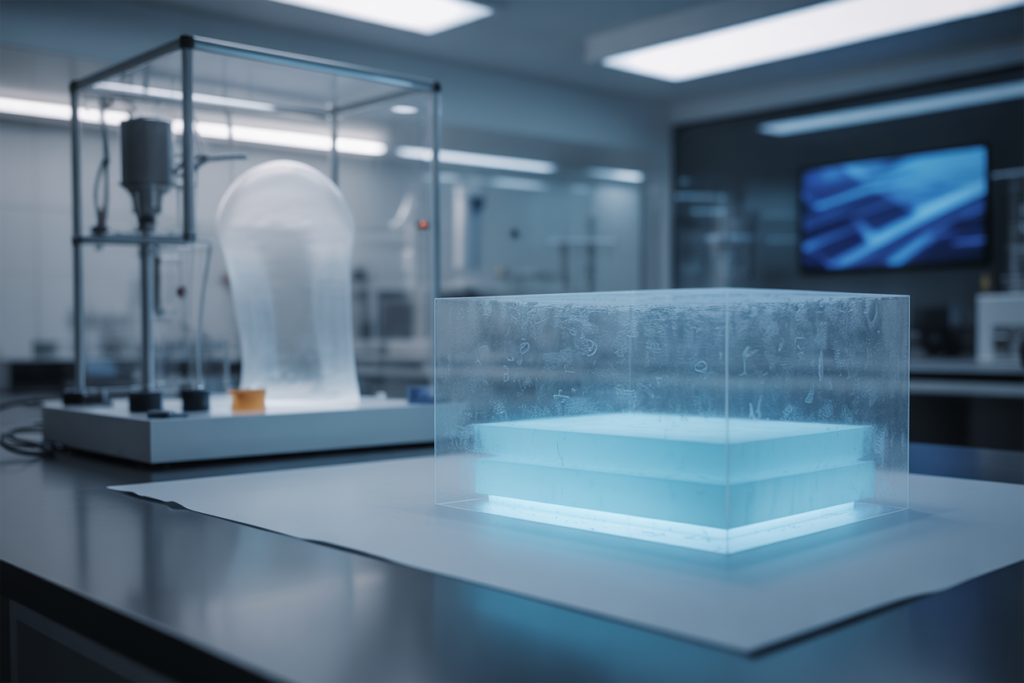
Aerogel has long been a material reserved for space missions and high-budget applications — remarkable in its capabilities but out of reach for most industries and everyday use. From its extraordinary heat resistance and ultra-lightweight properties to its unmatched thermal insulation performance, the potential of aerogel is undeniable. The only thing standing between this space-age material and widespread adoption has been the complexity and cost of producing it. Empa’s revolutionary one-pot method, which cuts production time from twelve hours to just five while significantly reducing chemical solvent use, changes that equation entirely.
DashamLabs is taking this breakthrough a step further by working to localize aerogel production and make it accessible across diverse industries — from construction and automotive to industrial insulation. The goal is clear: building scalable, continuous production lines and customizing aerogel properties to meet specific industry needs will deliver affordable aerogel for everyone, produced at an industrial scale. If you’re in an industry that could benefit from high-performance, cost-effective insulation, now is the time to pay attention. The future of aerogel is no longer just in space — it’s being built right here on the ground.