
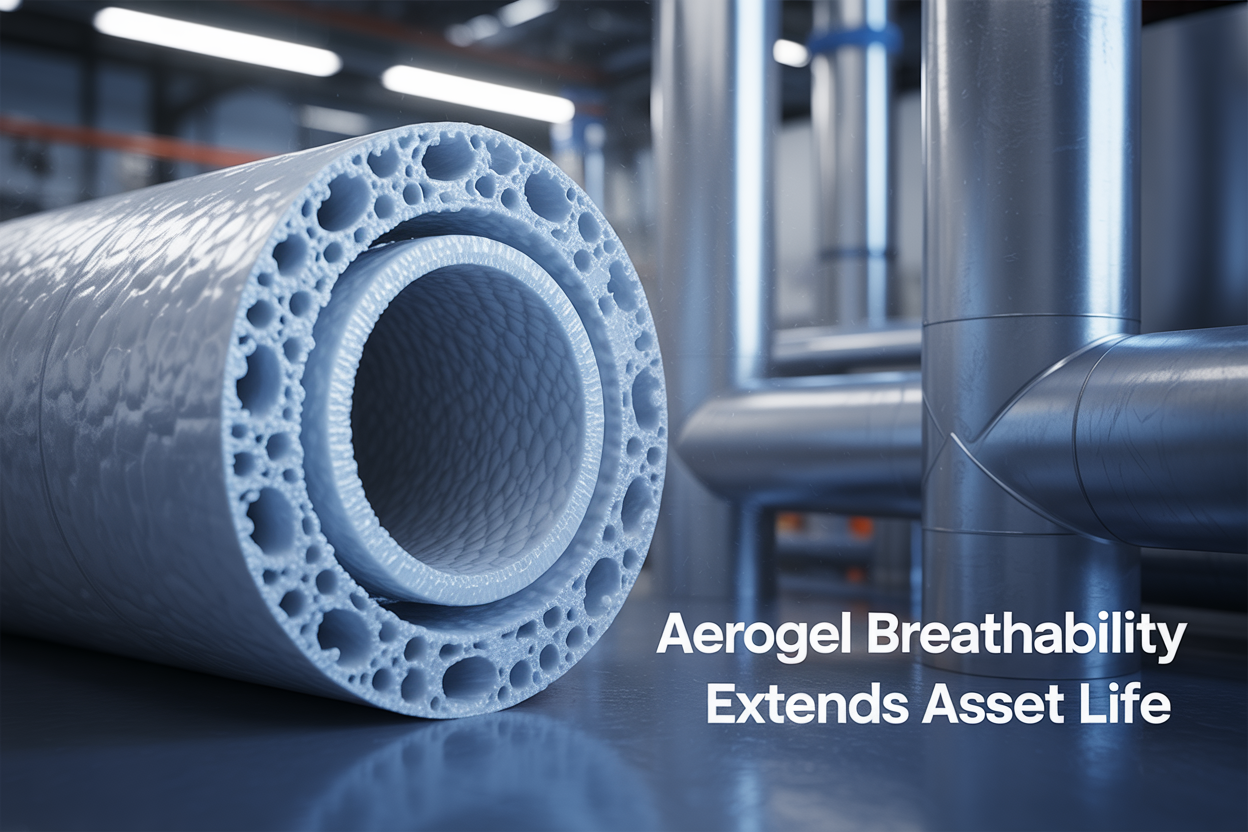
How Aerogel’s Breathability Extends Asset Life?
Asset managers and manufacturers face constant challenges in protecting valuable infrastructure from moisture damage and thermal cycling, which shorten equipment lifespan. Aerogel’s breathability offers a game-changing solution: this revolutionary material blocks liquid water while allowing vapor to pass through, creating an ideal protective barrier that keeps assets dry and functional for decades longer than traditional insulation.
This breakthrough matters for facility managers, equipment engineers, and industrial asset owners who need reliable protection in demanding environments. Aerogel’s unique nanoporous structure delivers what other materials cannot: simultaneous moisture protection and vapor permeability that prevents condensation buildup and thermal stress.
The discussion ahead explores how aerogel’s breathability advantage solves critical moisture and durability problems that plague industrial assets. Key topics include the material’s revolutionary vapor-permeable properties, which transform equipment performance, and its enhanced durability features, which extend operational life while reducing maintenance costs. The analysis also covers proven manufacturing advantages and real-world market applications that demonstrate measurable improvements in asset longevity across aerospace, industrial, and commercial installations.
Revolutionary Properties That Transform Material Performance
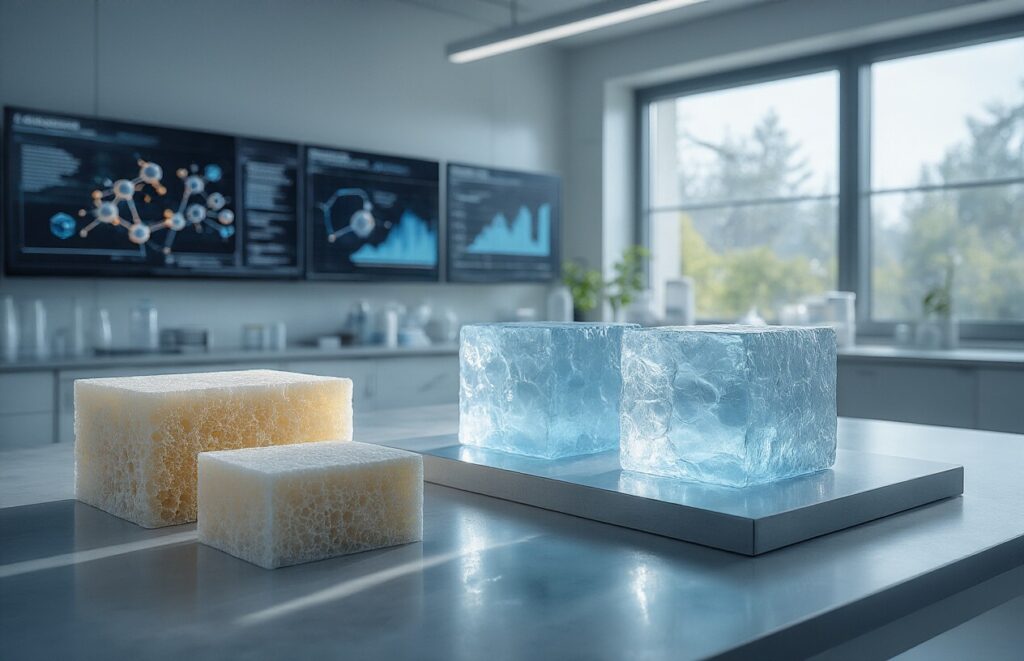
Ultra-Low Thermal Conductivity Creates Superior Insulation
Aerogel materials demonstrate exceptional thermal insulation capabilities with thermal conductivity values ranging from 0.003 W·m⁻¹·K⁻¹ for silica aerogel down to approximately 0.004 W·m⁻¹·K⁻¹ in vacuum conditions. These materials achieve R-values between 14 and 105 for a 3.5-inch thickness, effectively nullifying both conduction and convection heat transfer through their unique composition of insulating gas with a microstructure that prevents gas movement.
Nanoscale Porous Structure Traps Air for Maximum Heat Retention
The nanoscale architecture consists of spherical particles measuring 2-5 nm fused into clusters with pores just under 100 nm in diameter. This open porous network maintains porosity between 90% and 99.8%, creating an interconnected structure in which gases can enter and exit freely while still providing thermal barriers. The Knudsen effect further reduces thermal conductivity in these small cavities, making aerogel thermal conductivities lower than those of the gases they contain.
Lightweight Design Reduces Bulk While Maintaining Warmth
Aerogel density ranges from approximately 1,000 g/m³ for the lowest-density silica nanofoam formulations to higher values depending on specific material composition. This ultralight characteristic results from the material being composed of up to 99.8% air within its solid foam structure, creating materials typically only 15 times heavier than air itself while maintaining exceptional insulation performance.
Hydrophobic Properties Prevent Water Absorption and Performance Loss
The manufacturing process involving supercritical drying or freeze-drying creates materials with inherent resistance to moisture absorption, preventing the collapse of the gel structure that would otherwise compromise thermal performance. This hydrophobic nature ensures that the nanoscale porous structure remains intact and functional even in humid environments, maintaining consistent insulation properties throughout the material’s operational lifetime.
Breathability Advantage Solves Critical Industry Problems
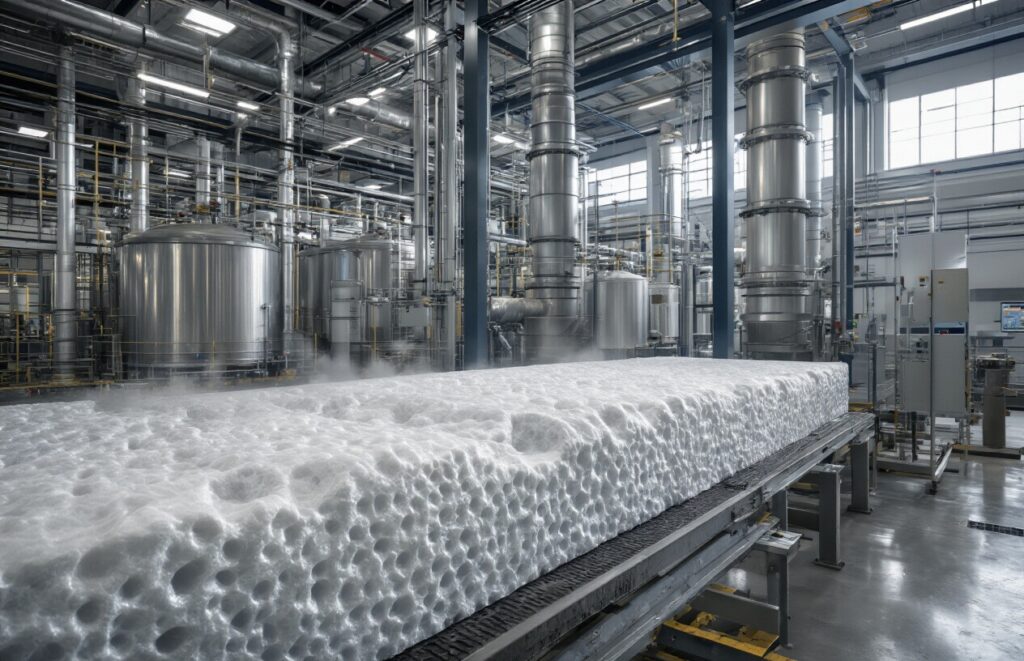
Moisture Vapor Transfer Prevents Internal Condensation Buildup
Aerogel’s exceptional breathability stems from its highly interconnected porous structure featuring numerous permeable capillary channels that facilitate thermal-moisture transfer. With interconnected porosity reaching approximately 69% and smaller pore sizes of around 17 micrometers, these materials enable air and moisture to pass through microchannels, effectively balancing the thermal-moisture environment between internal surfaces and external conditions.
Superior Air Circulation Eliminates Stuffiness During Activity
The superior air permeability of aerogels significantly exceeds that of traditional materials, with breathability over 100 times greater than commercial alternatives. This enhanced circulation, combined with a moisture permeability rate of 2675 g/m²/day, ensures continuous airflow that prevents trapped air from accumulating and maintains optimal ventilation even under demanding operational conditions.
Asset Longevity Through Enhanced Durability Features

Stable Structure Prevents Fiber Degradation Over Time
Accelerated aging studies demonstrate that aerogel materials maintain structural integrity throughout extended service periods. Research involving heating-freezing, freeze-thaw, and heat-cold cycles shows that while mechanical properties are reduced after aging, protective coating systems significantly reduce deterioration rates. Microstructural analysis reveals that aerogel maintains its essential pore structure even after exposure to environmental stressors.
Resistance to Clumping Maintains Long-Term Loft Performance
The nanoporous structure of aerogel remains stable throughout its operational lifecycle, preventing the clumping issues common in traditional insulation materials. Studies indicate that the pore size distribution changes minimally during aging, with pore diameters remaining within their optimal range for thermal performance. This structural stability ensures consistent loft characteristics that directly contribute to extended asset life and reliable thermal properties over decades of use.
Manufacturing and Processing Advantages for Commercial Success

Flexible Production Options Enable Multiple Product Formats
Aerogel manufacturing demonstrates remarkable versatility through diverse morphological configurations, including powder, beads, monoliths, mats, and films. This flexibility stems from advanced production techniques that utilize various source materials, including inorganic compounds, organic polymers, natural polymers, carbons, and hybrid materials. The ability to create multiple product formats enables manufacturers to target specific market applications while maintaining the core properties of high specific surface area and low bulk density.
Simplified Handling Reduces Manufacturing Complexity
Modern aerogel production benefits from streamlined processing approaches that minimize operational complexity. The implementation of hybrid sol-gel techniques, continuous-flow processing, and in situ functionalization reduces handling requirements while maintaining product quality. Additionally, the development of ambient-pressure drying processes, as demonstrated by poly-DCPD aerogel production, eliminates the need for costly CO2-supercritical drying methods, thereby significantly simplifying the manufacturing workflow and reducing energy requirements throughout the production cycle.
Market Applications Demonstrate Proven Commercial Value
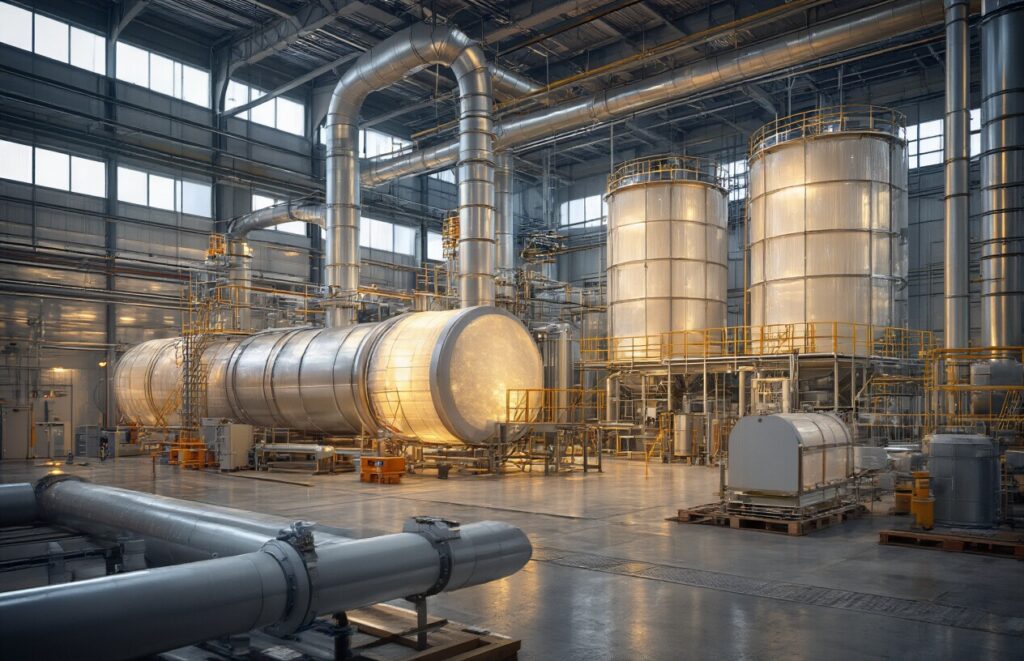
Aerospace Heritage Provides Technology Credibility
The aerospace and defense sectors represent crucial aerogel market segments, requiring lightweight materials that withstand extreme temperatures and conditions. Aerogels are increasingly used in spacecraft, aircraft insulation, and protective gear for military applications, where weight reduction improves fuel efficiency and overall performance, driving demand and positioning them as essential materials in high-performance applications.
High-End Brand Adoption Validates Performance Claims
The global aerogel market demonstrates substantial commercial validation, with a market size valued at USD 1.38 billion in 2024 and projected to reach USD 3.49 billion by 2030, representing a compound annual growth rate of 17.0%. North America dominates with 44.4% of global revenue, while the silica segment accounts for 64.9% market share, confirming widespread industry acceptance across multiple high-value applications.
Competitive Advantages Over Traditional Insulation Materials
Performance Superiority Across Multiple Testing Parameters
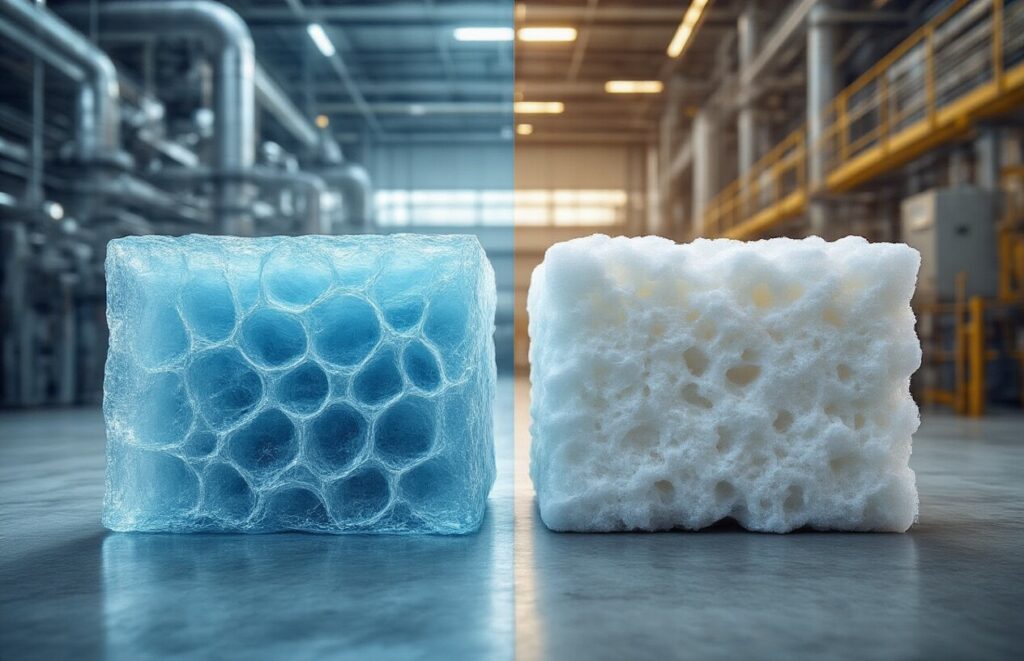
Aerogel demonstrates exceptional thermal conductivity ranging from 0.013-0.020 W/m·K, significantly outperforming traditional materials. Polyurethane foam measures 0.020-0.030 W/m·K, while mineral wool and fiberglass range from 0.035-0.050 W/m·K. This superior performance enables aerogel to achieve equivalent insulation levels while requiring 50-80% less thickness.
Elimination of Down’s Water Sensitivity Problems
Traditional insulation materials face significant moisture-related challenges that aerogel effectively addresses. Fiberglass poses handling hazards due to the formation of glass powder, while mineral wool lacks inherent fire resistance without costly additives. Polystyrene requires harmful HBCD coating for fire protection, presenting health and environmental risks. Aerogel’s hydrophobic properties and non-combustible nature eliminate these traditional vulnerabilities entirely.
Aerogel’s breathability represents a fundamental breakthrough in material science that directly translates to extended asset life across multiple industries. From aerospace applications requiring extreme temperature resistance to high-performance apparel demanding all-weather functionality, aerogel’s unique nanoporous structure delivers superior thermal insulation while maintaining excellent moisture management properties. This combination of ultra-low thermal conductivity and exceptional breathability eliminates the traditional trade-offs between protection and performance, resulting in materials that remain effective longer and require less frequent replacement.
The commercial success of aerogel technology, as demonstrated by leading brands such as Columbia, Adidas, and Helly Hansen, validates its potential to transform standards for asset longevity. Manufacturing innovations have made aerogel products more accessible and cost-effective, opening new opportunities for industries seeking durable, lightweight insulation solutions. Organizations looking to maximize asset performance should consider aerogel’s proven ability to extend operational life by enhancing durability, reducing maintenance requirements, and sustaining performance in challenging environmental conditions. The technology’s evolution from aerospace-grade applications to commercial markets demonstrates its readiness to deliver tangible asset life-extension benefits across diverse markets.