
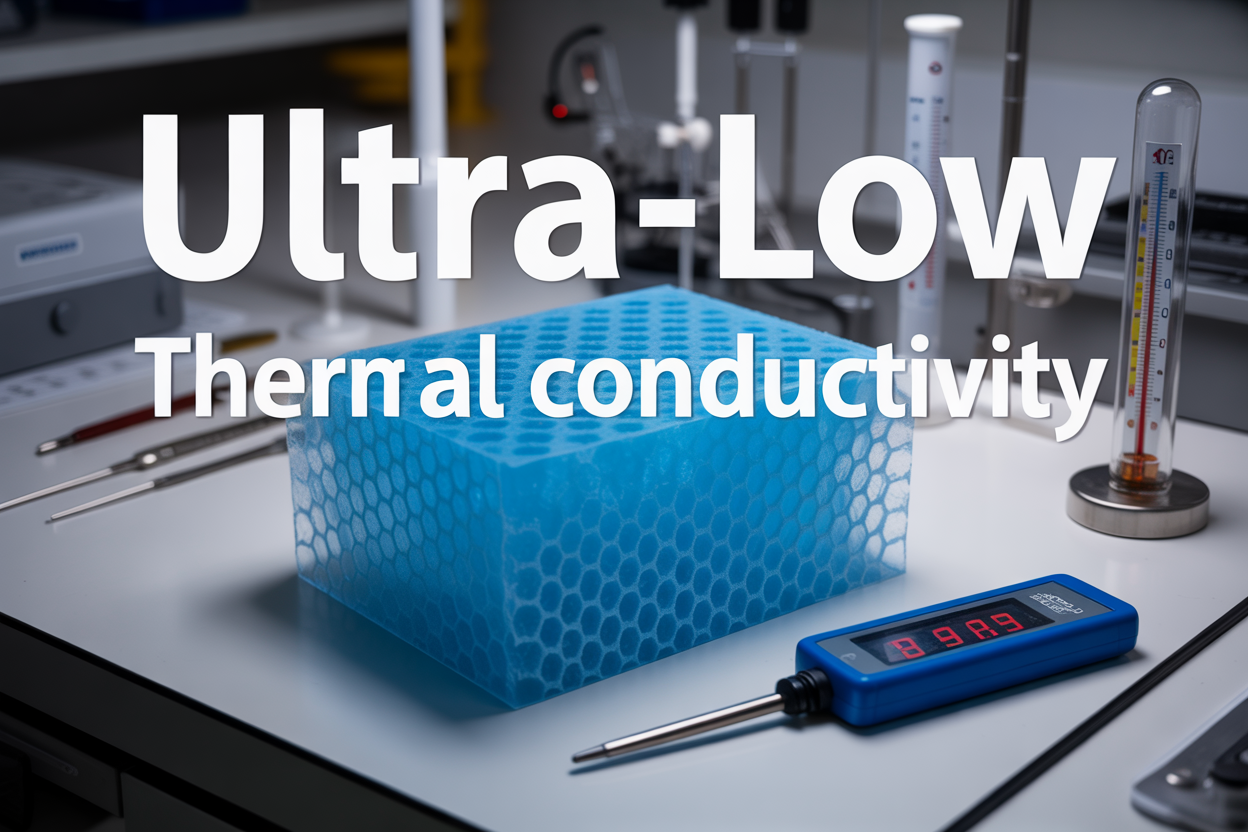
Silica aerogel has earned its reputation as one of the world’s best insulators, with thermal conductivity values as low as 0.013 W/mK—roughly three times that of still air. This remarkable material interests engineers, researchers, and product developers who need superior insulation performance in space-constrained or extreme temperature applications.
Understanding why aerogel achieves such exceptional thermal properties requires examining both its unique nanoporous structure and the specific mechanisms that block heat transfer. We’ll explore how the manufacturing process of aerogel directly affects its thermal performance and examine how it compares with conventional insulation materials in real-world scenarios.
Understanding Silica Aerogel’s Unique Structure
Nanoporous Architecture Creates Maximum Air Gaps
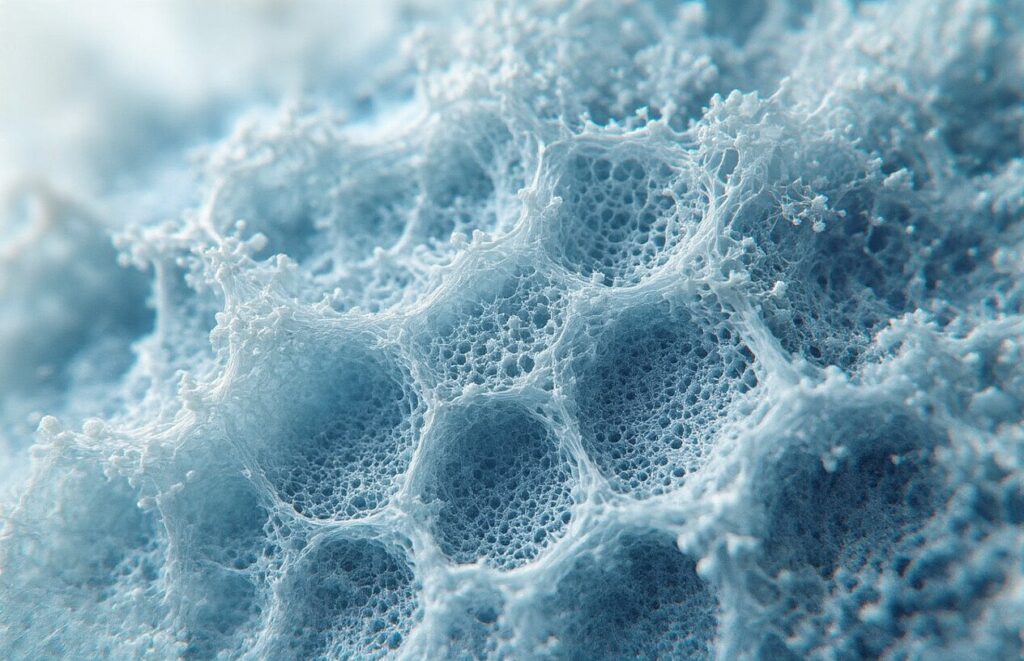
Silica aerogel’s extraordinary insulating properties stem from its intricate nanoporous structure, in which up to 99.8% of the material consists of air trapped within interconnected pores. These nanoscale cavities measure just 2-50 nanometers in diameter, smaller than the mean free path of air molecules. This microscopic maze effectively prevents heat transfer through convection, as air molecules cannot move freely within such confined spaces.
Ultra-Low-Density Material Composition
The remarkable density of silica aerogel ranges from just 0.003 to 0.35 g/cm³, making it one of the lightest solid materials on Earth. This ultra-low density directly contributes to its exceptional thermal performance, as the minimal solid framework provides fewer pathways for heat conduction. The sparse silica skeleton occupies less than 5% of the total volume, creating an incredibly efficient thermal barrier that rivals the insulating properties of still air while maintaining structural integrity.
Three-Dimensional Silica Network Formation
The three-dimensional silica framework forms through a carefully controlled sol-gel process, creating branching chains of silicon dioxide particles that interconnect throughout the structure. These silica strands, measuring only 2-5 nanometers in diameter, form a delicate web that maintains the aerogel’s shape while preserving the critical pore structure. The network’s fractal geometry maximizes surface area while minimizing material usage, resulting in a solid that behaves more like trapped air than conventional matter in terms of heat transfer.
Three Key Mechanisms Behind Low Thermal Conductivity
Solid Conduction Minimization Through Sparse Framework
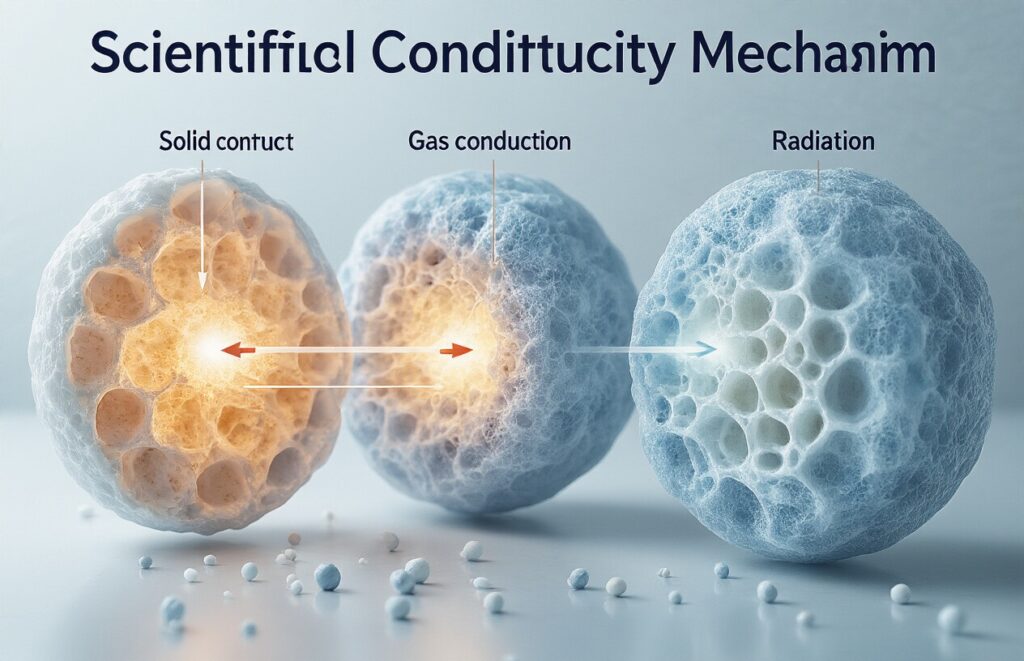
Silica aerogel’s structure contains less than 5% solids, creating an ultra-sparse silica framework that dramatically reduces heat transfer via direct contact. The remaining 95% consists of air-filled pores, leaving minimal pathways for thermal energy to travel through solid connections. This sparse network acts like a thermal maze where heat struggles to find continuous solid paths.
Gas Conduction Reduction via Nanoscale Pore Structure
The nanometer-scale pores within aerogel are smaller than the mean free path of air molecules at room temperature, typically measuring 2-50 nanometers. When pore sizes drop below molecular mean free paths, gas molecules collide more frequently with pore walls than with each other, severely limiting their ability to conduct heat. This Knudsen effect transforms normal air into an ineffective thermal conductor.
Radiation Heat Transfer Suppression at Low Temperatures
At temperatures below 100°C, aerogel’s silica framework effectively scatters and absorbs infrared radiation. The nanoscale silica particles create multiple interfaces that disrupt radiative heat transfer pathways. While radiation becomes more significant at higher temperatures, aerogel maintains excellent performance in typical insulation applications where radiative transfer remains minimal.
Convection Elimination in Microscopic Air Pockets
Convection requires space for air circulation, but aerogel’s pore sizes are far too small to allow meaningful air movement. The trapped air remains essentially motionless within the nanoscale cavities, eliminating convective heat transfer. This creates millions of tiny air pockets that act as individual thermal barriers rather than heat-transfer pathways.
How Manufacturing Process Affects Thermal Performance
Sol-Gel Formation Creates Optimal Pore Distribution
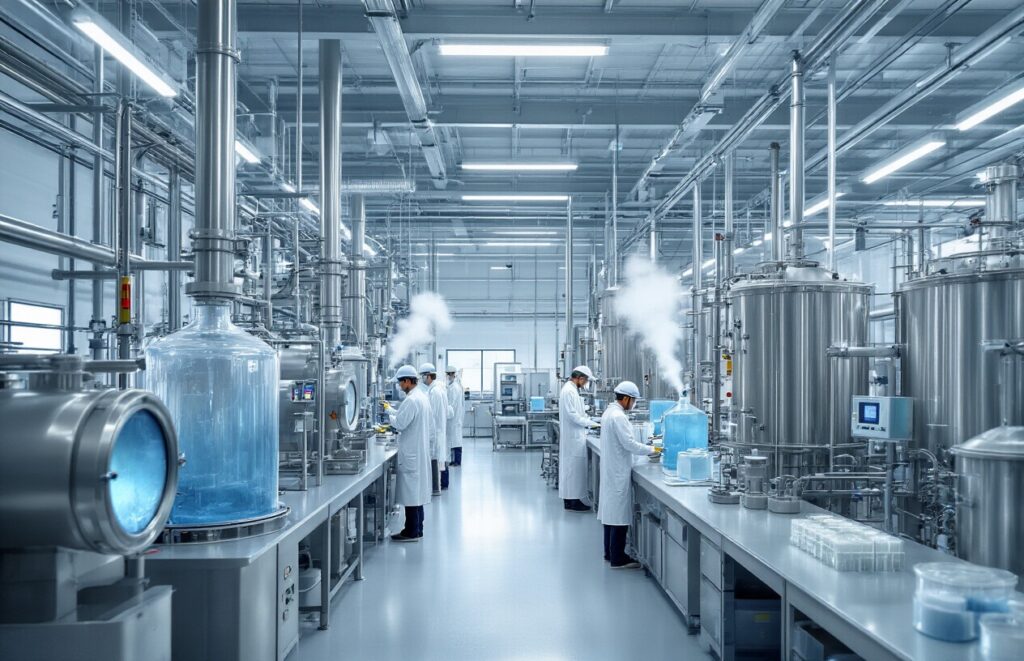
The sol-gel process governs how silica particles bond during aerogel formation, directly affecting thermal performance. When silica precursors hydrolyze and condense slowly at low temperatures, they form an interconnected network with uniform nanopores, typically 10-50 nanometers in diameter. This controlled gelation prevents the formation of large pores that would increase thermal conductivity via convection. The pH, catalyst concentration, and gelation time all influence the final pore structure – faster gelation creates denser networks with smaller pores. At the same time, slower processes yield more open structures with slightly larger voids.
Supercritical Drying Preserves Delicate Structure
Traditional evaporative drying destroys aerogel’s fragile silica network through capillary forces that collapse pores and create dense, poorly insulating material. Supercritical drying using CO2 eliminates liquid-gas interfaces by heating the gel above the critical point, where liquid and gas phases become indistinguishable. This gentle removal process maintains the original pore architecture and prevents structural collapse. The temperature and pressure conditions during supercritical drying must be carefully controlled – too aggressive conditions can still damage the network, while insufficient conditions leave residual solvents that increase thermal conductivity.
Surface Modification Techniques Enhance Insulation Properties
Surface modification through silylation replaces hydrophilic silanol groups with hydrophobic silyl groups, thereby preventing moisture absorption and dramatically increasing thermal conductivity. Trimethylchlorosilane (TMCS) or hexamethyldisilazane (HMDZ) treatments create water-repelling surfaces while maintaining the nanoporous structure. These modifications also reduce radiative heat transfer by decreasing the material’s infrared transparency. Some manufacturers add opacifiers such as carbon black or titanium dioxide during the sol-gel stage to further block thermal radiation, thereby creating aerogels with thermal conductivities as low as 0.012 W/m·K under ambient conditions.
Comparing Aerogel Performance to Traditional Insulation Materials
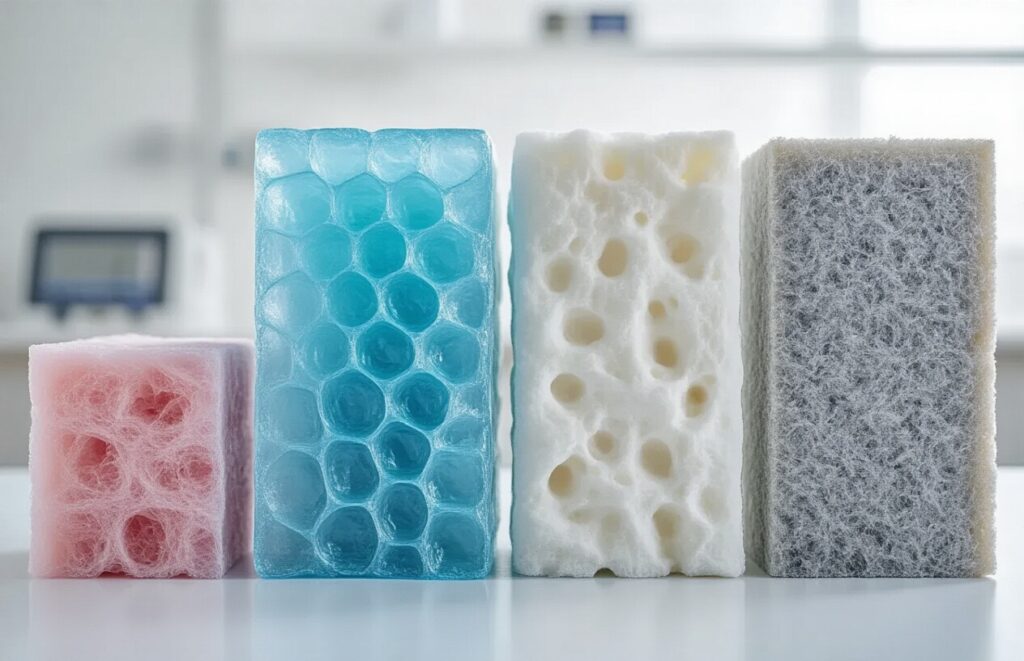
Superior Performance Over Fiberglass and Foam
| Insulation Material | Thermal Conductivity (W/m·K) | R-Value per inch |
| Silica Aerogel | 0.013-0.014 | R-10 to R-14 |
| Fiberglass Batt | 0.040-0.050 | R-2.9 to R-3.8 |
| Polyurethane Foam | 0.020-0.030 | R-5.5 to R-6.5 |
| Mineral Wool | 0.038-0.042 | R-3.1 to R-4.2 |
Aerogel has a thermal conductivity roughly three times lower than that of high-performance polyurethane foam and four times lower than that of fiberglass. This translates to R-values exceeding R-10 per inch, compared to fiberglass at R-3.8 per inch. The nanoporous structure blocks convective heat transfer while maintaining minimal solid conduction pathways.
Thickness Reduction Benefits for Space-Constrained Applications
Traditional insulation often requires 6-12 inches of thickness to achieve the desired thermal performance. Aerogel accomplishes equivalent insulation with just 2-3 inches, creating valuable space savings in aerospace, automotive, and building applications. This thickness advantage becomes critical in retrofits where wall cavity space is limited or weight restrictions apply.
Long-Term Stability Advantages in Extreme Conditions
Aerogel maintains its thermal properties across the temperature range of -200°C to 650°C without degradation. Unlike foam insulation that can shrink, crack, or lose effectiveness over time, aerogel’s silica backbone remains dimensionally stable. This durability eliminates the performance decay common in organic foam insulations, particularly under thermal cycling or moisture exposure.
Cost-Performance Analysis for Industrial Applications
While aerogel costs 5-10 times more per square foot than conventional insulation, its superior thermal performance often justifies the investment. Energy savings from reduced heat loss can recover initial costs within 3-5 years in high-temperature industrial processes. The thinner profile also reduces structural support requirements, offsetting some material cost premiums through simplified installation and reduced system complexity.
Real-World Applications Leveraging Ultra-Low Thermal Conductivity
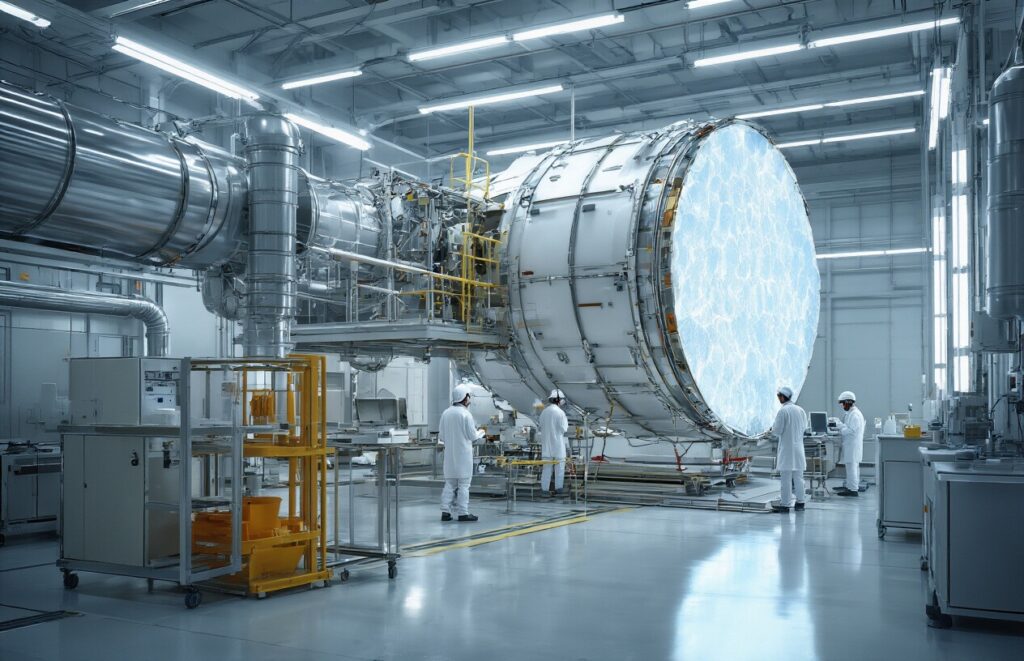
Aerospace and Space Exploration Uses
NASA’s Mars rovers rely on silica aerogel blankets to protect sensitive instruments from extreme temperature fluctuations. The material’s thermal conductivity of just 0.013 W/mK creates an effective barrier against the harsh Martian environment, where temperatures can swing from -195°F to 70°F. Space telescopes like the James Webb use aerogel insulation to maintain the ultra-cold operating temperatures required for infrared detection while minimizing weight penalties that are critical to launch costs.
Building Insulation and Energy Efficiency Solutions
Commercial buildings are incorporating aerogel-enhanced insulation systems to achieve superior thermal performance in thinner wall assemblies. High-rise construction particularly benefits from aerogel’s space-saving properties, allowing architects to maximize interior space while meeting stringent energy codes. Retrofit applications use aerogel blankets to upgrade historic buildings without compromising architectural integrity, delivering R-values up to 5 times higher than those of traditional fiberglass insulation.
Cryogenic Storage and Transportation Systems
Liquid natural gas terminals depend on aerogel insulation to prevent heat transfer that would cause costly product losses through boil-off. The material maintains its insulating properties at temperatures down to -452°F, making it ideal for hydrogen storage systems in fuel cell applications. Industrial cryogenic equipment uses aerogel coatings to reduce energy consumption by up to 30% compared to conventional insulation methods.
Silica aerogel’s incredibly low thermal conductivity comes down to its unique nanoporous structure and the three key mechanisms that work together: solid conduction through its minimal skeletal framework, gas conduction that’s nearly eliminated by pores smaller than air molecules, and radiative heat transfer that gets scattered by countless tiny particles. The manufacturing process plays a huge role too – getting those pore sizes just right and maintaining the delicate structure can make or break the material’s insulating performance.
When you stack aerogel against traditional insulation like fiberglass or foam, there’s really no contest. Aerogel can achieve thermal conductivity values that are multiple times lower, which is why it’s become the go-to choice for everything from spacecraft thermal protection to building insulation in tight spaces. If you’re working on a project that demands the absolute best thermal performance in the smallest package possible, aerogel isn’t just an option – it’s often the only material that can get the job done.