
DashamLabs —
What Is Aerogel? A Complete Guide to the World’s Most Advanced Insulation Material
Aerogel is one of the most remarkable materials ever created. It is a solid that can be up to 99.8% air, yet it ranks among the most effective thermal insulators ever discovered. Once confined to laboratories and space missions, aerogel is now becoming a practical material for industry, infrastructure, and mobility.
This guide explains aerogel in plain language: how it works, how manufacturers make it, the main types of aerogel, where aerogel is used today, and how aerogel is changing the way engineers manage heat. Whether you are an engineer, a student, or a procurement professional, you will find clear answers here.
Aerogel Explained: A Simple Definition
Because aerogel is mostly air trapped in tiny pores, it is extremely light and extremely effective at blocking heat. That combination is the reason aerogel is so valuable to modern engineering.
It helps to think of an aerogel as a sponge whose holes are far too small to see. Where a kitchen sponge has pores you can watch water flow through, the pores inside an aerogel are measured in nanometres. That scale changes how heat, light, and even sound behave inside the material.
Why Aerogel Is Called “Frozen Smoke”
Aerogel is often nicknamed “frozen smoke” for its translucent, hazy appearance. A block of aerogel looks almost like a cloud captured in solid form. Despite its ghostly look, aerogel is a true solid, not a foam and not a liquid. You can hold it, press it gently, and even stand small objects on it.
Nano-porous Structure
Fiber Reinforcement
A Brief History of Aerogel
Only in recent decades have advances in chemistry, reinforcement, and process engineering made aerogel a material factories, contractors, and designers can rely on. Today, it is manufactured at industrial scale, and interest continues to grow across sectors that depend on efficient heat control.
What Does Aerogel Do?
In practical terms, aerogel does three important things:
Keeps heat where it belongs: a thin layer stops hot surfaces from losing heat and cold surfaces from gaining it.
Saves space and weight: because it blocks heat so efficiently, a thin layer can do the job of a much thicker conventional layer.
Protects equipment: a hydrophobic surface repels water, which helps prevent moisture damage and corrosion on the surfaces it covers.
Compared with conventional materials, aerogel can provide up to five times better thermal performance. That is why it is described as one of the most effective insulators ever discovered.
How Aerogel Blocks Each Type of Heat Transfer
Heat moves in three ways, and aerogel interferes with all of them:
- Conduction: heat travels through solid material. Here, the solid framework is so thin and winding that heat has little material to travel through.
- Convection: heat travels with moving air. The pores are so small that the air trapped inside cannot circulate freely.
- Radiation: heat travels as infrared energy. The internal structure scatters and absorbs part of this energy, and additives can reduce it further.
This triple effect gives aerogel its outstanding thermal resistance at very low thickness.
What Is Aerogel Made Of?
Aerogel can be made from several different base materials, but every aerogel shares the same basic idea: a solid network with extremely fine pores, filled with air.
The Sol-Gel Process
Most aerogels start with a process called sol-gel chemistry. A liquid solution of precursor materials reacts to form a gel, a wet solid network soaked in liquid. The key challenge is removing that liquid. If the liquid simply evaporates, surface tension inside the tiny pores pulls the network together and collapses the structure.
To make aerogel, manufacturers use specialized drying techniques that remove the liquid and replace it with gas while preserving the nanoporous structure. Preserving that structure is essential, since it directly determines the thermal conductivity of the final aerogel.
Silica: The Most Common Aerogel Material
Silica aerogel is the most widely used aerogel. It is produced from silica-based precursor materials that form a highly porous network. That network traps air at the nanoscale, minimizing heat conduction. This type is most often chosen for industrial thermal protection.
Other Base Materials
Aerogel can also be produced from carbon, metal oxides, and polymers. Each base material gives the aerogel different properties. Some aerogel types are prized for thermal performance, while others are valued for electrical conductivity, absorption, or chemical activity.
Types of Aerogel
Silica Aerogel
Silica aerogel is the best-known type, and the one most people picture when they hear the word aerogel. It is lightweight, an excellent thermal insulator, and naturally fire-resistant. With the right surface treatment, silica aerogel becomes hydrophobic, repelling water much like a lotus leaf.
On its own, pure silica aerogel is fragile. Modern products solve this by combining the material with fiber reinforcement, creating a flexible aerogel blanket that bends without breaking.
What Is Silica Aerogel Used For?
Silica aerogel is mainly used for high-performance insulation. Typical applications include:
- Insulation for industrial piping, vessels, and process equipment
- Oil and gas infrastructure, where heat loss and corrosion are concerns
- Thermal management in vehicles, including electric vehicles
- Thin insulation for cold chain equipment
- Lightweight insulation for aerospace and defense
- Space-saving insulation in construction and infrastructure
Silica aerogel performs well in a thin layer, so it is especially useful where space and weight are limited.
What Is Carbon Aerogel?
Carbon aerogel is an aerogel whose solid network is made almost entirely of carbon. It is typically produced by first creating an organic aerogel from polymer precursors and then heating it in an oxygen-free environment, a process called pyrolysis, which converts the network into carbon.
The result is a black, porous carbon material with a very high internal surface area. Unlike silica, carbon aerogel conducts electricity. This opens up applications such as:
- Electrodes for supercapacitors and batteries
- Capacitive deionization for water treatment
- Catalyst supports in chemical processes
- Gas adsorption and filtration
Carbon aerogel can also withstand very high temperatures in vacuum or inert environments, where it is protected from oxygen. In normal air, however, it burns at high temperatures, so silica aerogel remains the preferred choice for everyday industrial thermal protection.
What Is Graphene Aerogel Used For?
Graphene aerogel is a three-dimensional network built from graphene, a form of carbon just one atom thick. It is usually produced by gelling, drying, and chemically reducing graphene oxide, and it is among the lightest solid materials ever created.
This type of aerogel is electrically conductive, compressible, and highly absorbent. Researchers are exploring it for absorbing oil and organic solvents from water, energy storage electrodes, sensors, and electromagnetic shielding. Most of these applications are still at the research or early commercial stage.
Polymer and Metal Oxide Aerogels
Aerogels can also be made from polymers and from metal oxides such as alumina. Polymer aerogels tend to be more flexible, while metal oxide aerogels are explored for catalysis and specialized high-temperature applications.
Download Technical
Documentation
Access full technical specifications, performance curves, safety data, and installation guidelines.
Why DashamLabs
- Patented Indian technology: Patented silica aerogel insulation technology, engineered in India and for the world; the first Made in India patented technology of its kind.
- A genuine manufacturer: Engineered and manufactured at DashamLabs, not a trading company; supply is direct from the manufacturer.
- Performance you can specify: λ ~ 0.016 W/m·K and up to 5× lower thermal conductivity, documented in a TDS on request.
- Technology partner and backers: ARCI as technology partner; backed by Speciale Invest, IIMA Ventures and Theia Ventures.
- Scientist-led team: Founders from IIT Roorkee, Harvard Business School and Clemson University, with an inventor co-founder who has two decades of aerogel research. Meet the team.
- Local manufacturing, responsive support: Made in India, with technical documentation and application and installation guidance across India. See why an Indian aerogel supply chain matters.
Key Properties of Aerogel
The properties of aerogel depend on its type, but industrial silica aerogel products typically offer:
- Ultra-low thermal conductivity: blocks heat far better than conventional materials.
- Very low density: a solid that is mostly air.
- Fire resistance: silica aerogel is naturally flame-resistant.
- Hydrophobic stability: treated material repels water and stays stable in harsh environments.
- Wide temperature range: performs in both cold and hot conditions.
- Thin profile: equal thermal performance at a fraction of the thickness.
Strengths and Limitations
No material is perfect. The strengths are clear: outstanding thermal resistance, low weight, and a slim profile. Historically, its limitations were cost and fragility. Pure monolithic aerogel can crack under mechanical stress, and early production methods were slow and expensive. Reinforced formats and improved manufacturing now address both issues, which is why aerogel is spreading from niche projects into mainstream industry.
What Are Aerogels Used For?
Industrial Insulation
This is the largest application area. Aerogel reduces heat loss from pipes, vessels, and equipment in energy and process industries. Cutting heat loss is one of the lowest-hanging fruits for improving industrial energy efficiency, and aerogel makes that job thinner and more effective.
Oil and Gas
In oil and gas facilities, aerogel helps maintain process temperatures. Because a hydrophobic layer keeps moisture out, it also helps reduce corrosion under insulation, a major maintenance concern for pipelines and process equipment.
Automotive and Electric Vehicles
Vehicles have tight limits on space and weight. A thin, lightweight, fire-resistant aerogel layer helps engineers manage heat in both combustion-engine and electric vehicles.
Cold Chain
Aerogel helps keep temperatures stable in cold chain equipment, where thinner walls can mean more usable space for goods.
Aerospace and Defense
Aerogel was first put to serious use in aerospace, and its low weight and thermal performance keep it valuable in aerospace and defense systems today.
Construction and Infrastructure
In buildings and infrastructure, thin aerogel layers save space while improving energy efficiency. Aerogel use is growing as designers seek slimmer walls and roofs.
Science and Energy Storage
Beyond insulation, conductive aerogels are used in energy storage, water treatment, and sensing, where electrical conductivity and high surface area matter.
What Is Aerogel Insulation?
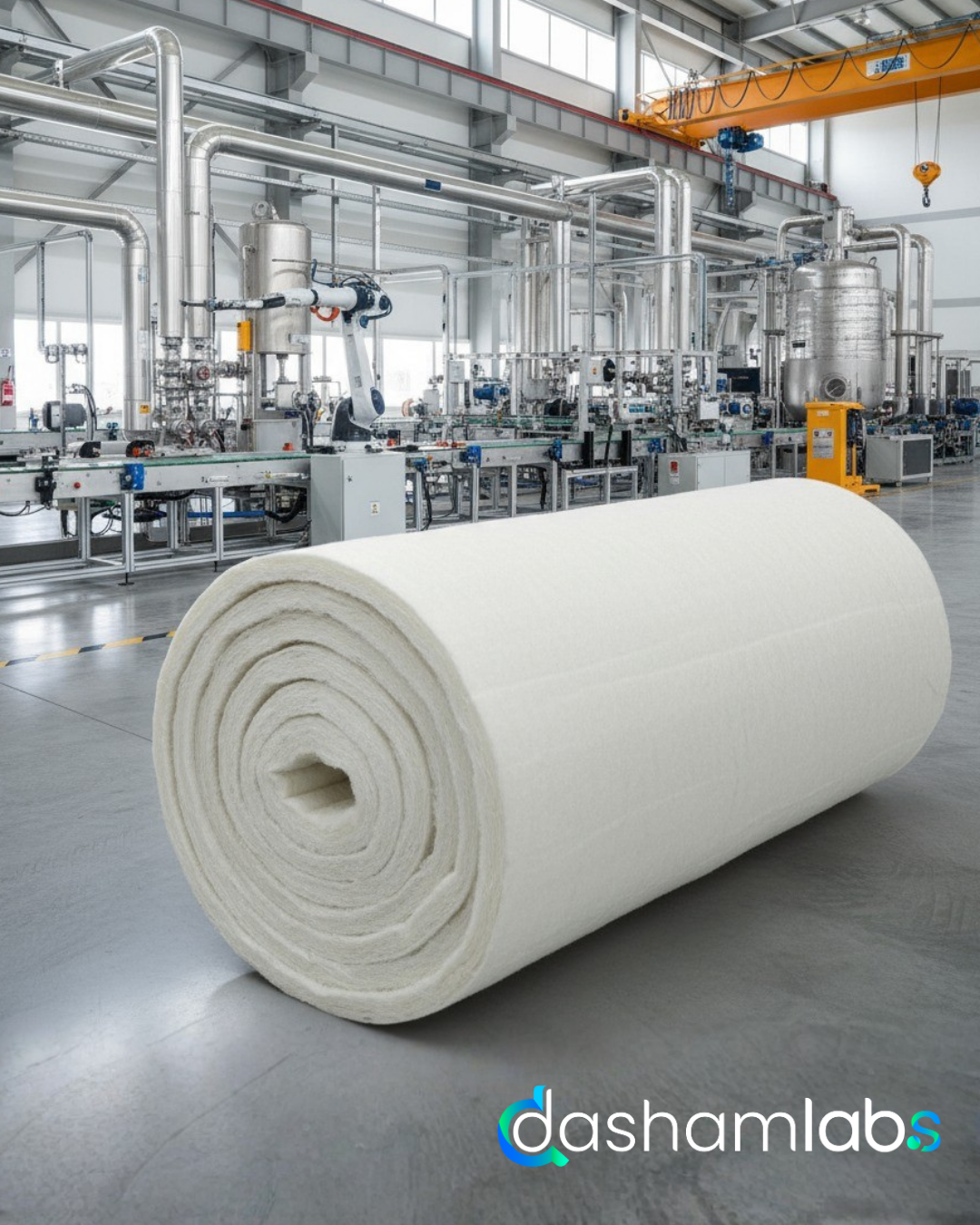
Aerogel insulation is any thermal barrier that uses aerogel as its core material. The most common form is the aerogel blanket, a flexible product made by combining silica aerogel with fiber reinforcement. You can wrap an aerogel blanket around pipes, vessels, and irregular surfaces where rigid insulation boards would be impractical.
How Aerogel Compares with Conventional Materials
Conventional options such as mineral wool, glass wool, and foam rely on bulk thickness to slow heat flow. Aerogel works differently. Its nanoporous structure does the work at a microscopic level, so aerogel achieves the same thermal performance in a much thinner layer. Traditional insulation typically has a thermal conductivity between 0.030 and 0.090 W/m·K, while high-performance aerogel can reach around 0.016 W/m·K.
|
Factor |
Conventional materials |
Aerogel |
|
Thermal conductivity |
λ 0.030–0.090 W/m·K |
λ ~0.016 W/m·K |
|
Thickness needed |
High |
Very low |
|
Weight |
Heavier |
70–90% lighter |
|
Moisture behaviour |
Can absorb water |
Hydrophobic |
|
Fit on complex shapes |
Often difficult |
Flexible formats conform closely |
Aerogel is also fire-resistant and flexible in reinforced formats, which makes it easier to install on complex shapes and more durable in wet or harsh environments.
Why Aerogel Was Once So Hard to Get
For decades, aerogel faced four major problems. Manufacturing required rare resources and energy-intensive processes, so costs were prohibitive. Early aerogel was brittle like glass and crumbled under stress. Production happened in small laboratory batches that could never meet industrial demand. Wasteful solvents also gave aerogel manufacturing a high environmental footprint.
Advances in process engineering, reinforcement, and continuous production are now removing those barriers, turning aerogel from an expensive exception into a practical choice for everyday projects.
Common Myths About This Material
Myth: It is too fragile for real-world sites. Early versions were brittle, which is where the reputation comes from. Today, fiber-reinforced formats bend without breaking and are used on working plants, pipelines, and vehicles.
Myth: It is only for space missions. Its first serious applications were in aerospace, but the same properties now make it valuable for pipes, vessels, buildings, and cold chain equipment.
Myth: Thin insulation cannot perform. With conventional products, performance depends on bulk. Here, the nanoporous structure does the work so that a few millimeters can match much thicker conventional insulation.
Myth: It is always too expensive. The upfront price has traditionally been higher. However, reduced thickness, lower maintenance, and energy savings often lower total cost of ownership, and modern production is bringing prices down.
Myth: It is difficult to install. Flexible formats wrap around bends, curves, and irregular surfaces, and they are designed to withstand handling, vibration, and repeated temperature changes.
Myth: It absorbs water like mineral wool. Hydrophobic grades repel water, keeping performance stable and protecting the surfaces underneath from corrosion under insulation.
Design Thinner, Lighter Thermal Systems Today
Be among the first to deploy scalable aerogel insulation in your platform, made in India and built for the world. Samples currently available in limited quantities for qualified projects.
Where Insulation Performance Matters Most
Insulation choices matter most where heat loss is expensive, space is scarce, or safety is critical. In practice, it is used on steam and process lines in energy-intensive plants, on hot equipment where surface temperatures must stay low to protect workers, in compact vehicle compartments, and in retrofits on existing assets where there is simply no room to add thicker insulation. In each case, the ability to achieve strong performance in a slim layer is the deciding factor. Thin layers also open up new possibilities for designers, since products no longer need to be built around bulky layers.
Is It the Right Choice for Your Project?
It is worth considering when one or more of the following apply:
- Space is limited, and conventional layers would be too thick to fit.
- Weight matters, as in vehicles and aerospace systems.
- Surfaces operate in wet, humid, or outdoor conditions where moisture is a risk.
- Fire safety is a priority.
- Surfaces are curved or irregular and hard to cover with rigid boards.
- Energy costs are high,h and every degree of heat loss adds up.
- Maintenance access must be preserved around equipment.
If several of these describe your situation, the higher upfront price is often justified by long-term performance. A good next step is to test an evaluation piece on your own equipment in real operating conditions and compare results with your current solution.
What Company Makes Aerogel?
Several manufacturers worldwide make aerogel products. In India, DashamLabs makes flexible silica aerogel using a patented materials science and process platform developed entirely in India.
The company produces aerogel through continuous, industrial-scale manufacturing with optimized solvent recovery and minimal waste. By re-engineering the chemistry, structure, and production process of silica aerogel, the company aims to make aerogel affordable, flexible, and scalable. Its manufacturing facility is located at IMT Bawal, Rewari, Haryana, and the company is backed by Speciale Invest, IIMA Ventures, and Theia Ventures, with ARCI as its technology partner.
The DashamLabs Silica Aerogel Blanket
|
Property |
Specification |
|
Thermal conductivity (λ) |
0.016 W/m·K (room temperature) |
|
Operating temperature range |
–50 °C to 650 °C, continuous operation |
|
Density |
200 kg/m³ |
|
Fire performance |
Non-combustible |
|
Thickness options |
3 mm, 5 mm, 10 mm |
|
Hydrophobic and CUI resistance |
Prevents moisture ingress and corrosion under insulation |
The DashamLabs aerogel blanket delivers 3–5x better performance than traditional materials and is 70–90% thinner and lighter. DashamLabs produces only silica aerogel; it does not produce carbon or graphene aerogel.
Frequently Asked Questions
What is the use of aerogel in industry?
The main industrial use of aerogel is thermal protection for pipes, vessels, equipment, vehicles, and buildings, where aerogel delivers high thermal performance in a thin, light layer.
Is aerogel a solid?
Yes. Aerogel is a true solid, even though it can be up to 99.8% air.
Why is aerogel such a good insulator?
Its microscopic pores trap air and block the pathways heat normally travels through, so aerogel sharply reduces heat transfer.
Is aerogel waterproof?
It can be made hydrophobic, so it repels water and resists moisture damage.
Is aerogel fire-resistant?
Silica aerogel is naturally fire-resistant. The DashamLabs product is non-combustible.
Is aerogel expensive?
Aerogel has historically cost more than conventional materials. Its thin profile, energy savings, and durability can offset that over the life of an installation, and new manufacturing methods are lowering costs.
Can I try aerogel for my project?
Yes. DashamLabs offers evaluation material in limited quantities for qualified testing and pilot projects.
Experience Aerogel for Yourself
Aerogel has moved from the laboratory to the factory floor. If you want to see how aerogel performs in your own application, request an evaluation piece from DashamLabs, made in India and built for the world.