
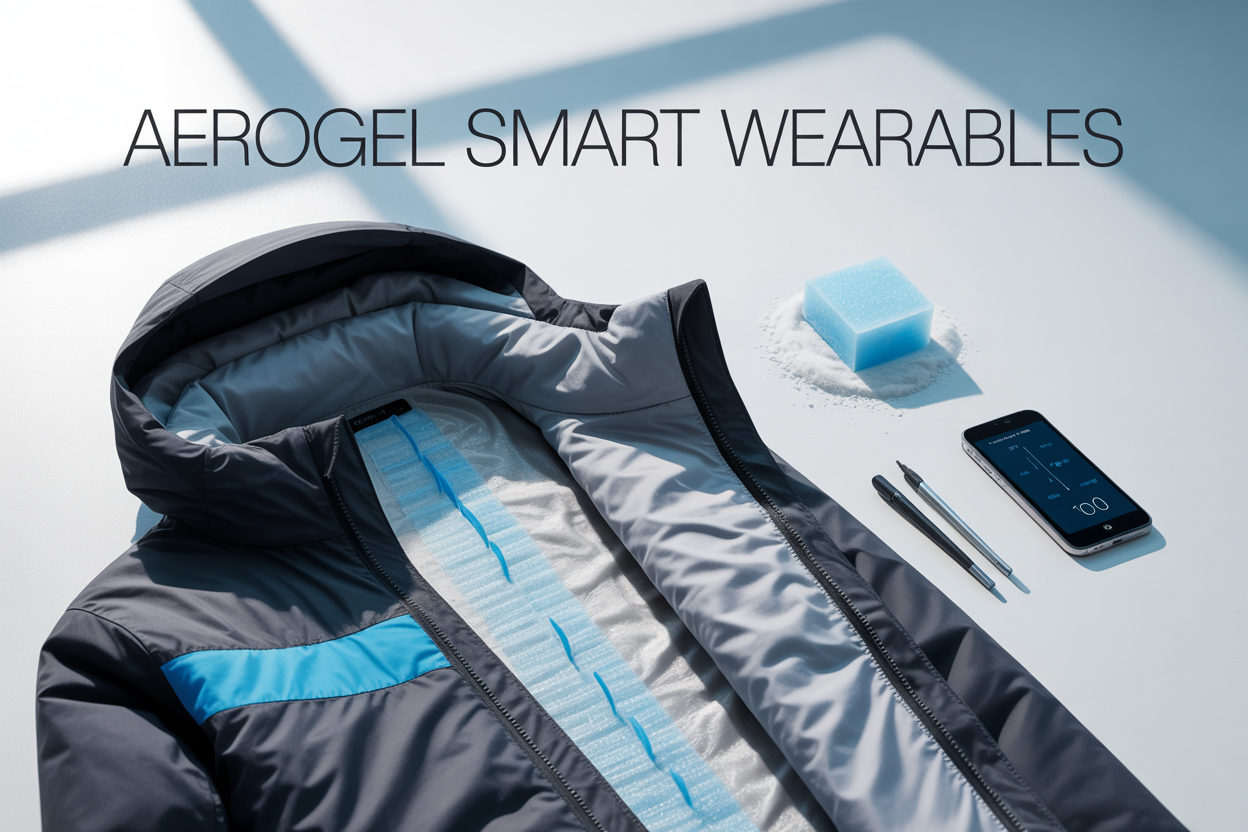
Smart wearables technology is pushing the boundaries of outdoor apparel design, and aerogel insulation represents a breakthrough that could transform how adventurers, athletes, and outdoor professionals stay warm without sacrificing mobility. This exploration examines whether aerogel can successfully integrate into wearable technology for outdoor clothing, addressing the needs of mountaineers, winter sports enthusiasts, and anyone who demands peak performance from their gear.
Aerogel, known as “frozen smoke,” offers thermal properties that outperform those of traditional down and synthetic insulation while remaining remarkably lightweight. The material’s nanoporous structure provides exceptional warmth-to-weight ratios, making it an attractive candidate for smart outdoor apparel where every gram matters.
This analysis covers how aerogel technology works, its current applications in outdoor gear, and its performance compared with conventional insulation materials. The discussion also examines the technical challenges manufacturers face when integrating aerogel into smart wearables and explores the market opportunities driving innovation in this space.
Understanding Aerogel Technology and Its Revolutionary Properties

What Aerogel Is and How Its Nanoporous Structure Works
Aerogel is a three-dimensional nanoporous solid material prepared via sol-gel synthesis followed by specialized drying techniques, such as supercritical or atmospheric drying. Often referred to as “solidified smoke,” it is unique in its internal porosity, which exceeds 90%, meaning air occupies the vast majority of the material’s volume. The structure forms a nanoscale pore system, supported by a solid framework and filled with gas, creating a unique architecture that confers several exceptional properties on aerogels.
Key Advantages: Ultra-Lightweight Design with Superior Insulation
This nanoporous architecture delivers ultra-low thermal conductivity ranging from 0.012-0.024 W/(m·K), ultra-high specific surface area, low density, and outstanding functional design flexibility. Silica aerogel achieves densities as low as 3 kg/m³ with porosity ranging from 80% to 99.8%, while maintaining pore sizes typically distributed between 1 and 100 nm. These characteristics enable aerogels to achieve thermal conductivity two to three orders of magnitude lower than that of conventional inorganic insulating materials, even below that of static air.
Thermal Performance Metrics: R-Values and Heat Resistance Capabilities
At room temperature, silica aerogel exhibits a thermal conductivity as low as 0.012 W/(m·K) while maintaining performance even at elevated temperatures, reaching only 0.043 W/(m·K) at 800°C. Alumina aerogel variants achieve a thermal conductivity of 0.029 W/(m·K) at ambient temperature (30°C) and maintain excellent insulation properties at 1000°C, with a conductivity of only 0.0685 W/(m·K). Aluminosilicate composite aerogels extend temperature tolerance to 1200-1400°C while preserving structural integrity and thermal performance.
Moisture Resistance and Weather Protection Benefits
The nanoporous structure provides inherent moisture resistance, with silica aerogel achieving up to 99% water repellency while maintaining Class A non-combustibility. These characteristics make aerogel materials highly effective in applications that demand strict fire safety and moisture resistance. The stable properties at high temperatures without decomposition, combined with environmental friendliness, position aerogel as an ideal solution for weather protection in extreme conditions.
Current Applications of Aerogel in Outdoor Apparel
Existing Products: Gloves, Boots, and Jacket Applications
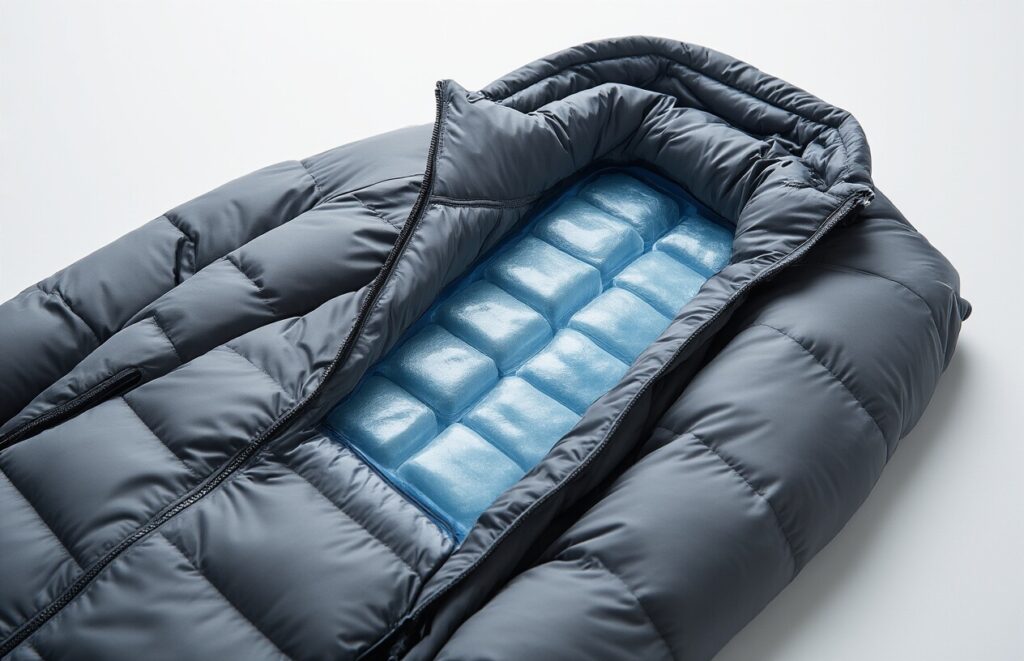
Current aerogel applications in outdoor apparel span multiple product categories, with companies like Shiver Shield and Alpargali leading market implementation. The Shiver Shield product line incorporates proprietary aerogel insulation into extreme-cold-weather gear, including winter coats, jackets, and accessories designed for temperatures as low as -62°F. Meanwhile, Alpargali has developed the Aerogel Graphene Puffer Jacket, combining aerogel and graphene technologies to create lightweight, high-performance outerwear that remains effective across a range of outdoor activities.
Performance in Extreme Weather Conditions (-40°C to +10°C)
Independent university testing demonstrates aerogel’s exceptional performance across extreme temperature ranges, with products like the Alpargali Aerogel Graphene Puffer Jacket rated for conditions from -40°C to +10°C. The material’s thermal conductivity of 0.003 W/m·K significantly outperforms that of traditional down insulation (0.029 W/m·K), providing superior warmth retention even in wet conditions. Aerogel’s hydrophobic properties ensure consistent insulation performance when exposed to moisture, maintaining effectiveness where traditional materials fail.
Weight Reduction Benefits Compared to Traditional Insulation
Aerogel insulation delivers substantial weight advantages over conventional materials, with the Alpargali Aerogel Jacket weighing approximately 1.0kg compared to traditional down jackets at 1.2kg or more. This 99% air-by-volume composition creates an exceptional warmth-to-weight ratio, achieving R-values of 10+ per inch, compared with down’s typical 3 per inch. The lightweight nature enables enhanced mobility and packability while maintaining superior thermal protection.
Real-World Testing Results from Cycling and Winter Sports Gear
Field testing across multiple outdoor activities validates Aerogel’s practical performance in real-world conditions. The Alpargali Aerogel Graphene Puffer Jacket demonstrates versatility for mountaineering, ski tours, hiking, winter sports, cycling, and outdoor camping. Testing results show consistent thermal protection and breathability during high-exertion activities, with the material’s micro-porous structure providing excellent air circulation while preventing heat loss during static periods.
Aerogel vs Traditional Insulation Materials Performance Comparison
Superior Warmth-to-Weight Ratio Over Down and Synthetic Fibers
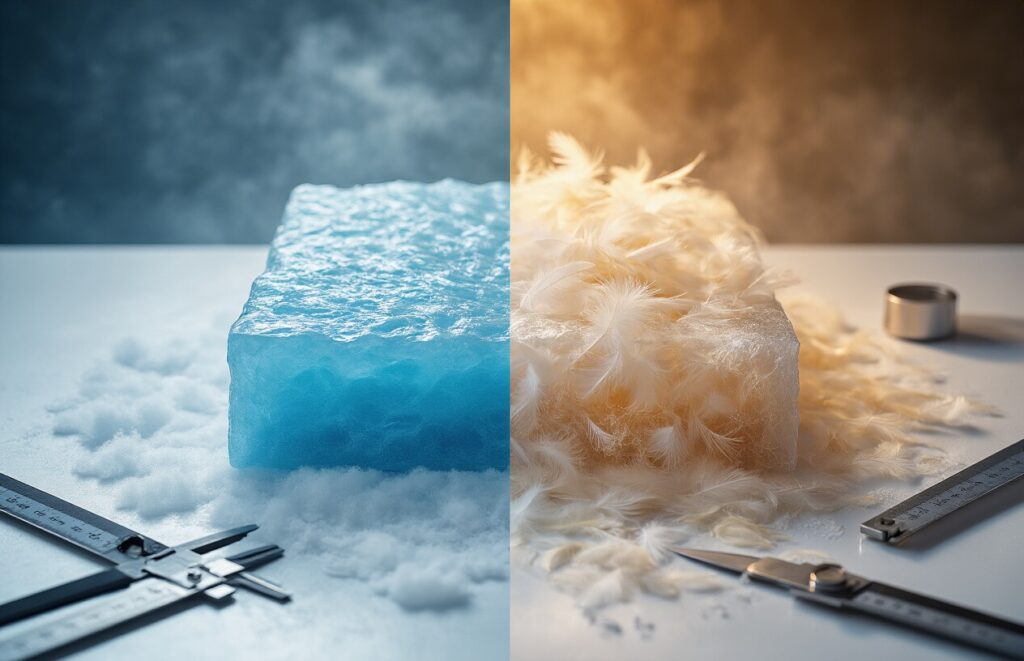
Aerogel fiber demonstrates exceptional thermal efficiency, with a conductivity of 0.017-0.020 W/m·K, significantly outperforming 700 fill power down at 0.025-0.030 W/m·K. This translates to 25-40% better thermal resistance per millimeter of thickness. A jacket containing 200 grams of aerogel fiber provides the same warmth as one with 280-300 grams of down insulation, resulting in weight savings of 80-100 grams while maintaining superior thermal performance.
Wet Weather Performance: Maintaining Insulation When Damp
The hydrophobic nanoporous silica structure enables aerogel fiber to maintain 90-95% of its thermal performance when wet, while down loses 70-80% of its insulating ability under identical moisture conditions. This critical advantage stems from water’s inability to penetrate the aerogel’s structure, ensuring consistent warmth regardless of external humidity or internal moisture from perspiration during active use.
Technical Challenges and Solutions for Aerogel Integration

Addressing Material Brittleness Through Encapsulation Methods
The brittleness of aerogel materials presents a significant challenge for textile integration, requiring sophisticated encapsulation strategies to maintain structural integrity. Research demonstrates that nano-confining functionalization strategies provide effective solutions through controlled solid-liquid interface adhesion and enhanced interfacial stability. Various spinning methodologies, including confined spinning, wet spinning, and microfluidic spinning, offer different approaches to address mechanical limitations while preserving the exceptional thermal properties of aerogel fibers.
Cost Considerations and Manufacturing Optimization
Manufacturing optimization focuses on scaling production methods from laboratory to industrial applications. The reference content indicates that continuous fiber production techniques, such as wet spinning and reaction spinning, show promise for commercial viability. Supercritical drying is the most efficient preservation method for porous nanostructures, though cost-effective alternatives, such as ambient-pressure drying, require careful solvent exchange to maintain their performance characteristics.
Market Opportunities and Future Growth Potential

Projected Market Growth from $2.4 Billion to $11.5 Billion by 2035
The aerogel market demonstrates a remarkable growth trajectory, with the broader aerogel sector valued at USD 1.41 billion in 2025 and projected to reach USD 3.14 billion by 2032 at a CAGR of 12.5%. The aerogel clothing segment specifically is experiencing exceptional expansion, growing from US$ 1.37 billion in 2025 to an anticipated US$ 2.75 billion by 2034, registering a CAGR of 8.09%.
Consumer Demand for High-Performance Technical Apparel
Previously discussed performance advantages are driving unprecedented consumer interest in aerogel-integrated apparel. Market research identifies innovative aerogel fabrics as redefining standards of comfort and warmth, while sustainable fashion trends favor eco-friendly aerogel solutions for conscious consumers. The expanding applications extend beyond traditional winter wear, encompassing outdoor adventures and athletic performance gear.
Applications Beyond Winter Wear: Year-Round Versatility
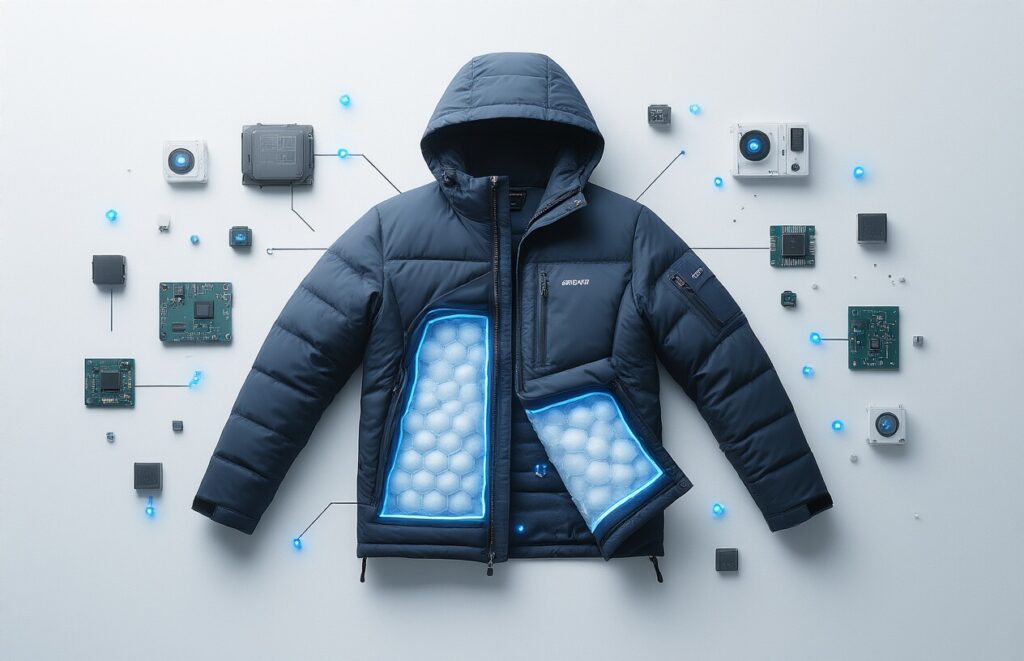
With this market momentum established, aerogel clothing applications are diversifying significantly. Revolutionary comfort solutions for extreme weather wear represent major opportunities, while performance-meets-style aerogel activewear attracts athletes and adventurers. Smart aerogel wearables integrate health monitoring capabilities for active lifestyles, demonstrating the technology’s versatility across seasonal and activity-specific applications.
Technology Advancement Reducing Production Costs
Now that market opportunities are clear, technological innovations are addressing historical cost barriers. Advanced supercritical drying technologies and strategic R&D collaborations are reshaping industrial production standards. These developments in silica and polymer aerogel manufacturing processes are reducing production complexities and material costs, enabling broader market accessibility and accelerating commercial adoption across diverse apparel categories.
Smart Wearable Integration Possibilities
Combining Aerogel with Graphene Technology for Enhanced Performance
Advanced aerogel fiber systems now integrate polydopamine coatings and phase-change microcapsules to create multifunctional thermal management capabilities. The cellulose acetate/thermoplastic polyurethane aerogel fibers demonstrate exceptional mechanical robustness with 481% elongation at break while maintaining 82% porosity for superior insulation performance.
Multi-Layer Insulation Systems for Maximum Efficiency
The complete thermal ecosystem approach utilizes aerogel polyester filament yarn in face fabrics and fleece composites, creating breathable insulating layers that maintain thermal efficiency without compromising flexibility. Multi-layer systems incorporate 0.9D aerogel filling as down alternatives and pearl ball technology to create microscopic air chamber networks that adapt to body movement while ensuring consistent heat distribution.
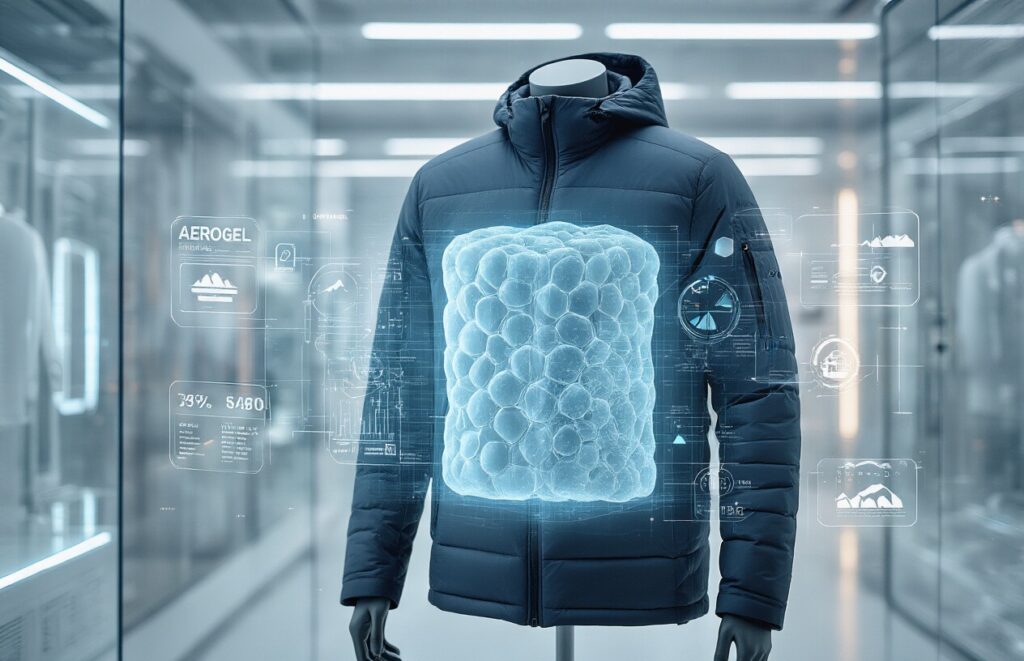
The integration of aerogel technology into smart wearables represents a significant advancement in outdoor apparel design. With its exceptional thermal conductivity of 0.003 W/m·K and an R-value of 10+ per inch, aerogel outperforms traditional insulation materials while remaining remarkably lightweight. Current applications in cycling gloves, boots, and jackets demonstrate the material’s practical viability, offering superior warmth-to-weight ratios and moisture resistance that traditional down and synthetic materials cannot match.
Despite technical challenges such as brittleness and higher production costs, ongoing innovations in encapsulation and manufacturing processes are making aerogel increasingly accessible for consumer applications. The aerogel clothing market is projected to grow from USD 2.4 billion in 2025 to USD 11.5 billion by 2035, indicating strong commercial potential. As smart wearable technology continues to evolve, aerogel’s unique properties—including its ability to function effectively in temperatures ranging from -40°C to +10°C while maintaining breathability and weather resistance—position it as a transformative material for next-generation outdoor apparel that combines advanced thermal management with intelligent functionality.